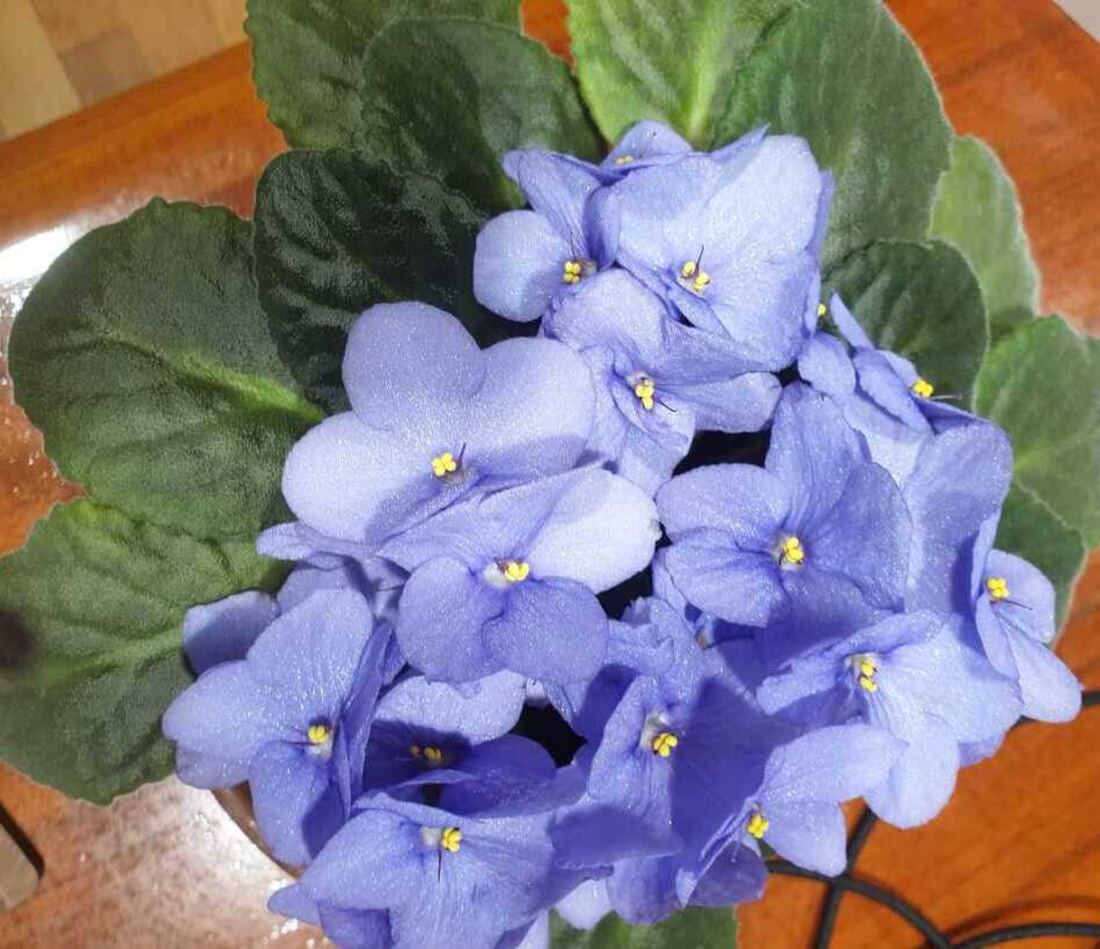
Light and flowering
Provide bright, indirect light, protecting leaves from harsh sun. A grow light can help in a dim room; use a suitable distance and duration for the fixture, with a daily dark period.
If flowering stops, review light, roots, nutrition and maturity together. A window's orientation alone does not describe the light reaching the plant.
Watering: room temperature, and keep it off the leaves
Keep the mix lightly moist, not saturated, watering when the surface begins to dry. Use room-temperature water and avoid wetting the crown. Water can be applied carefully to the mix from above or absorbed from below, followed by complete drainage.
Bottom watering is an option, not a requirement to leave the pot soaking for a fixed time. Check that moisture has reached the mix and remove standing water. A temperature difference between water and leaf can cause spotting, but not every spot is water injury.
Soil & potting
Choose an airy African-violet mix and a draining pot suited to the root system. Refresh deteriorated mix and address an exposed stem when needed, without automatically moving into a larger container. A very large volume of wet compost can be difficult for a small plant to use.
Humidity & temperature
Use a comfortably warm position away from cold glass and heating outlets. Moderate humidity and gentle air movement are useful; avoid persistently wet leaves or a closed, overheated enclosure. If a humidifier is used, keep it clean.
Feeding
Follow the label for an African-violet or suitable houseplant fertiliser, allowing for any feed already in the mix. Do not prescribe quarter strength at every watering for every product. More feed is not a substitute for light or healthy roots.
Common problems, at a glance
Use these checks to choose the next guide; a symptom alone does not establish a cause.
- Pale rings or blotches on leaves Water-temperature injury is possible, but spreading or soft lesions need further investigation. Full breakdown →
- Not flowering Check light, maturity, roots and feeding; avoid using extra fertiliser to force flowers.
- A visible bare stem or "neck" below the leaves Inspect stem and root health before repotting lower or deciding whether to restart a crown. Full breakdown →
- White, powdery coating on leaves Distinguish surface residue from a returning or spreading coating; seek identification if uncertain.
- Soft, mushy center or crown Inspect promptly and avoid saturating the crown. Extensive soft decay may leave little viable tissue.
Propagation: from a single leaf
African violet propagates readily from one healthy leaf, petiole included — cut it at a 45-degree angle, then plant the petiole into moist soil or a soil-perlite mix at an angle, leaving the leaf blade above the surface. Cover loosely with a plastic bag or a humidity dome to keep conditions moist, and keep it warm and in bright, indirect light. Small plantlets form at the base of the buried petiole over several weeks to a couple of months — not from the leaf itself, but from new growth at the cut end.
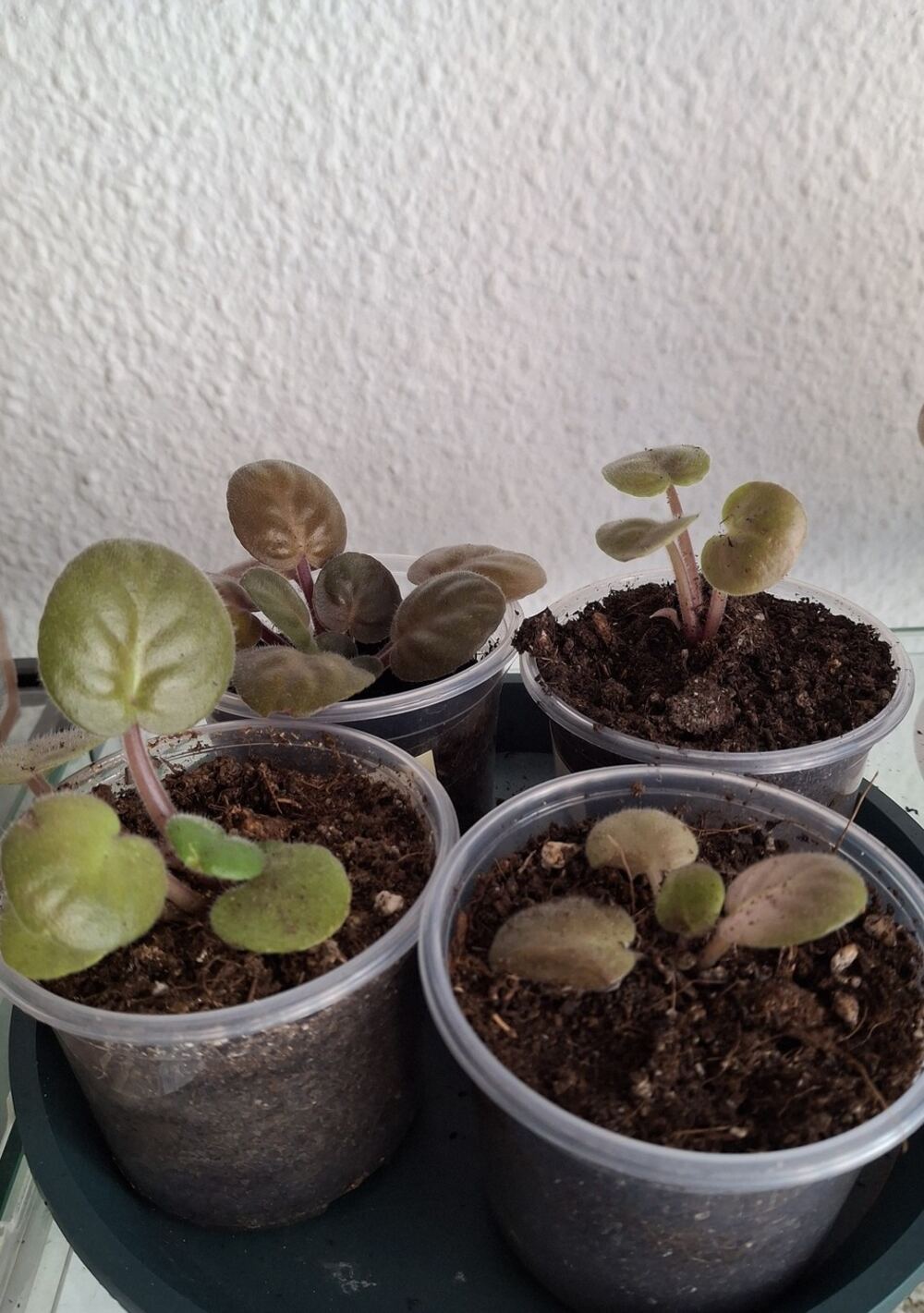
Once the plantlets have a few leaves of their own, gently separate them from the original leaf and pot each one individually. It's slower than propagating a pothos or philodendron, but it's one of the more reliable ways to multiply a plant collection from very little material — a single healthy leaf can produce several new plants.
Is African violet safe for pets?
African violets are generally listed as non-toxic to cats and dogs. Still discourage chewing and keep fertilisers, treatments and potting materials out of reach. A non-toxic listing does not mean every item in the pot is safe to ingest.
Keep a short care record
Photograph the whole plant and any damage, and note moisture checks and recent changes. Compare later growth rather than expecting an old scar to disappear. Continuing collapse, expanding lesions or extensive decay deserves specialist help.
Reference material
Reference material consulted for this independently written guide. The publishers listed have not reviewed or endorsed it.
- RHS — African violets
- University of Maryland — watering
- University of Maryland — symptom checks
- University of Minnesota — African violets