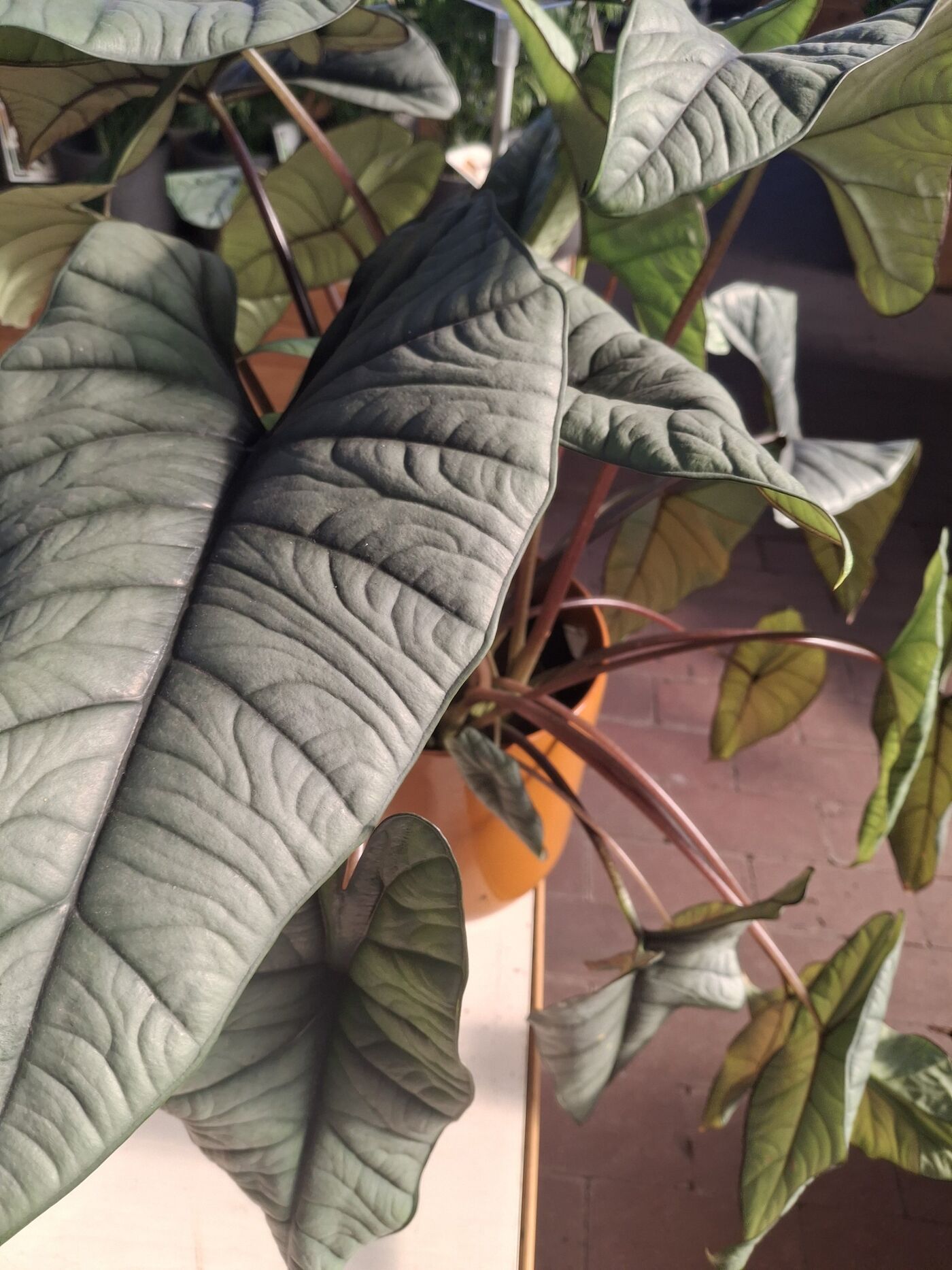
Platinum is a trade name
This guide uses the name Alocasia Platinum as it appears in the plant trade. It is also sold under names including Bisma or Bisma Platinum. Those labels do not establish that every plant sold as Platinum is a cultivar of Alocasia baginda.
The guidance below covers practical indoor Alocasia care. Keep the supplier label if available and use it when asking a specialist to confirm identity. Do not choose limestone amendments or other species-specific treatments solely from the word Platinum.
Find a bright, sheltered position
Use bright, filtered light and protect a plant accustomed to shade from strong sun. Check the leaves through the day rather than relying on a fixed distance from a window. New leaves becoming smaller are a reason to review conditions, not proof of one particular deficiency.
Check below the surface
During active growth, let the upper layer of the mix dry before watering thoroughly. Check roughly the top few centimetres and how heavy the pot feels. Avoid letting the entire root ball repeatedly become bone dry, but do not water while it is still wet below the surface.
Let water drain and empty the outer pot. A small, actively growing plant and a leafless resting one use water at very different rates, so a seven-day schedule is not a reliable rule.
If deposits accumulate or you suspect a water-quality issue, review both your water and fertiliser. Leaving water on the counter is not a treatment for dissolved mineral salts. Brown tips alone do not prove that tap water is the cause.
An airy mix and a draining pot
Use a well-drained houseplant mix with a structure suited to your conditions; bark and perlite are common additions. Keep a record of how quickly it dries instead of treating one recipe as compulsory.
Repot when roots crowd the container or the mix deteriorates, choosing a pot only modestly larger than the root system. Do not add dolomite or lime without a demonstrated need: the commercial name does not justify changing the mix's chemistry.
Warmth, humidity and airflow
Keep the plant warm during growth, above about 16°C (61°F), and away from cold draughts or hot air outlets. Alocasias generally appreciate humidity, but there is no single threshold below which every Platinum leaf will brown.
If dry air is a concern, measure it and consider a clean humidifier. Keep some air movement and avoid constantly wet foliage, particularly if spots are spreading.
Feed growth, not stress
Use a houseplant fertiliser according to its instructions when the plant is actively growing. Account for feed already included in fresh compost. Reduce or pause feeding when growth slows; do not fertilise a declining, leafless plant to try to wake it up.
Losing leaves is not automatically dormancy
Alocasias may slow down or lose foliage in cooler, darker conditions. Leaf loss can also follow root damage, pests or other stress. Check the growing conditions and stem base before deciding the plant is simply resting.
A firm base and stable condition are more reassuring than soft tissue, a bad smell or continuing collapse in wet mix. If those warning signs occur, inspect the roots and seek help for extensive decay rather than waiting for spring.
For a resting plant, reduce watering to match slower drying, keep it protected from cold and monitor it. Do not deliberately chill a healthy growing plant to make it dormant. New growth is the cue to gradually adjust care; a calendar date cannot guarantee recovery.
Start with the symptom
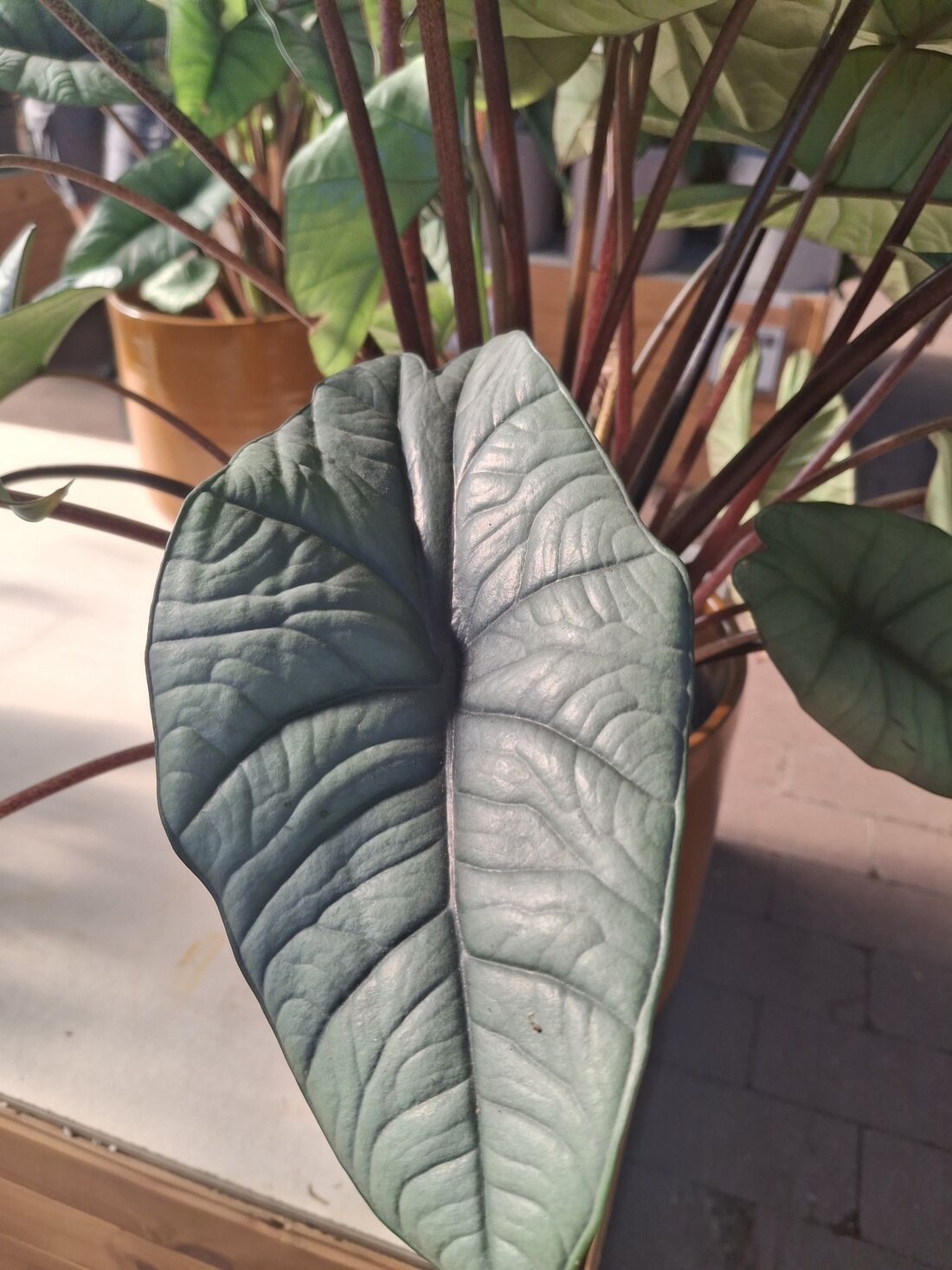
- Yellowing leavesCheck moisture and drainage first. One older leaf fading can be turnover; several leaves declining together need investigation. Leaf replacement is not a rule that the plant must always lose one leaf to grow another.
- Brown edgesReview drying, direct heat, light changes and feeding. Inspect roots if the foliage wilts while the mix remains wet.
- Spreading spotsA yellow halo alone does not establish a bacterial infection. Separate the plant if disease is suspected, avoid splashing and seek identification if lesions continue spreading.
- Speckling, webbing or sticky patchesInspect leaf undersides and stem joints. Identify any pest before choosing a treatment labelled for indoor plants.
Offsets and corms
Separating an established offset with its own roots is a practical home method. Some Alocasias also produce small corms that can be grown on separately; an unrooted corm is not the same as a ready-to-pot rooted plantlet. Avoid unnecessary disturbance of a stressed plant. A detached leaf will not produce a new Alocasia.
Keep away from pets and children
Alocasias contain irritating calcium oxalate crystals and are toxic to cats and dogs. Wear gloves when handling cut tissue. If a pet may have chewed the plant, contact a veterinarian or animal poison service; swallowing or breathing difficulty needs urgent attention.
What to record next
Photograph the whole plant and any damaged area now. Note watering dates, moisture checks and recent changes. Compare weekly for new damage or steady new growth; an old brown patch will not turn green again.