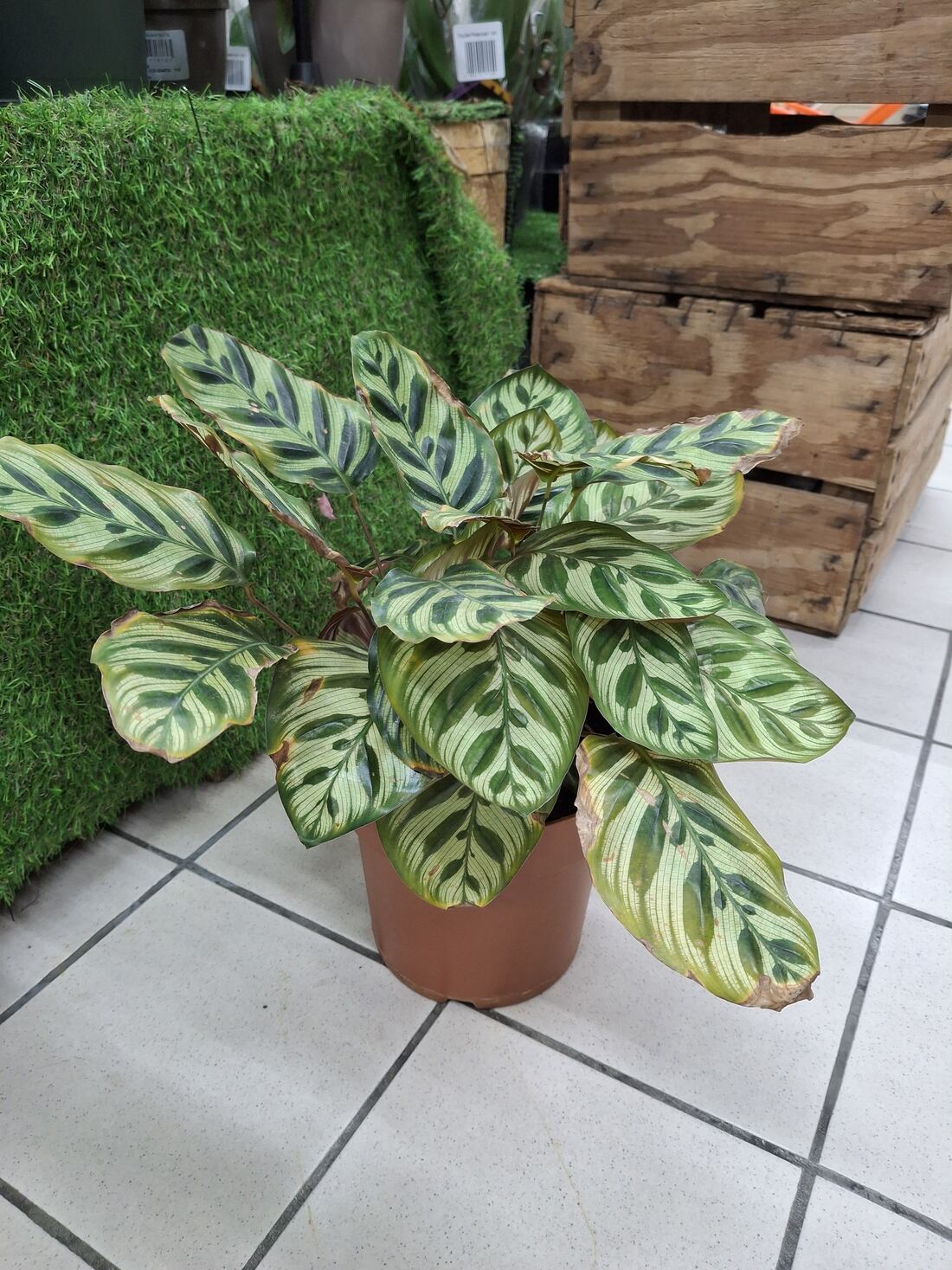
Light and the name on the label
Many plants sold as Calathea now belong to Goeppertia; the shop name is still widely used. Keep the cultivar label, because leaf colour and markings vary. Provide bright, filtered daylight, without exposing shade-grown leaves suddenly to strong sun.
Look at the actual spot at different times of day. A window's compass direction alone cannot account for trees, buildings, curtains or the season.
Moist, not permanently wet
Check the upper layer of compost and the weight of the pot. Water as the surface starts to dry, before the whole root ball becomes dry. Let excess drain and empty the cover pot. When growth slows, check first rather than repeating a summer routine.
Brown tips do not by themselves prove a water-quality problem. Review watering and feeding together. If mineral accumulation is a concern, try a known low-mineral source such as distilled water. Leaving tap water overnight does not remove dissolved mineral salts; do not assume every household filter removes them either.
Potting and feeding
Choose moisture-retentive houseplant compost that also drains freely, in a pot with drainage holes. Repot when roots need room or the mix has deteriorated, using only a modest increase in pot size.
Feed during active growth according to the fertiliser's houseplant instructions, allowing for any feed already in fresh compost. More fertiliser is not a remedy for unexplained leaf damage.
Warmth and humidity
Keep the plant away from cold draughts, hot radiators and air-conditioning outlets. Calatheas appreciate humid air, but a single humidity number is not a diagnosis. Measure conditions beside the plant before buying equipment or repeatedly moving it.
If a humidifier is needed, keep it clean and avoid constantly wet foliage. Increasing humidity does not replace checking whether the roots are too wet or too dry.
Choose the next check
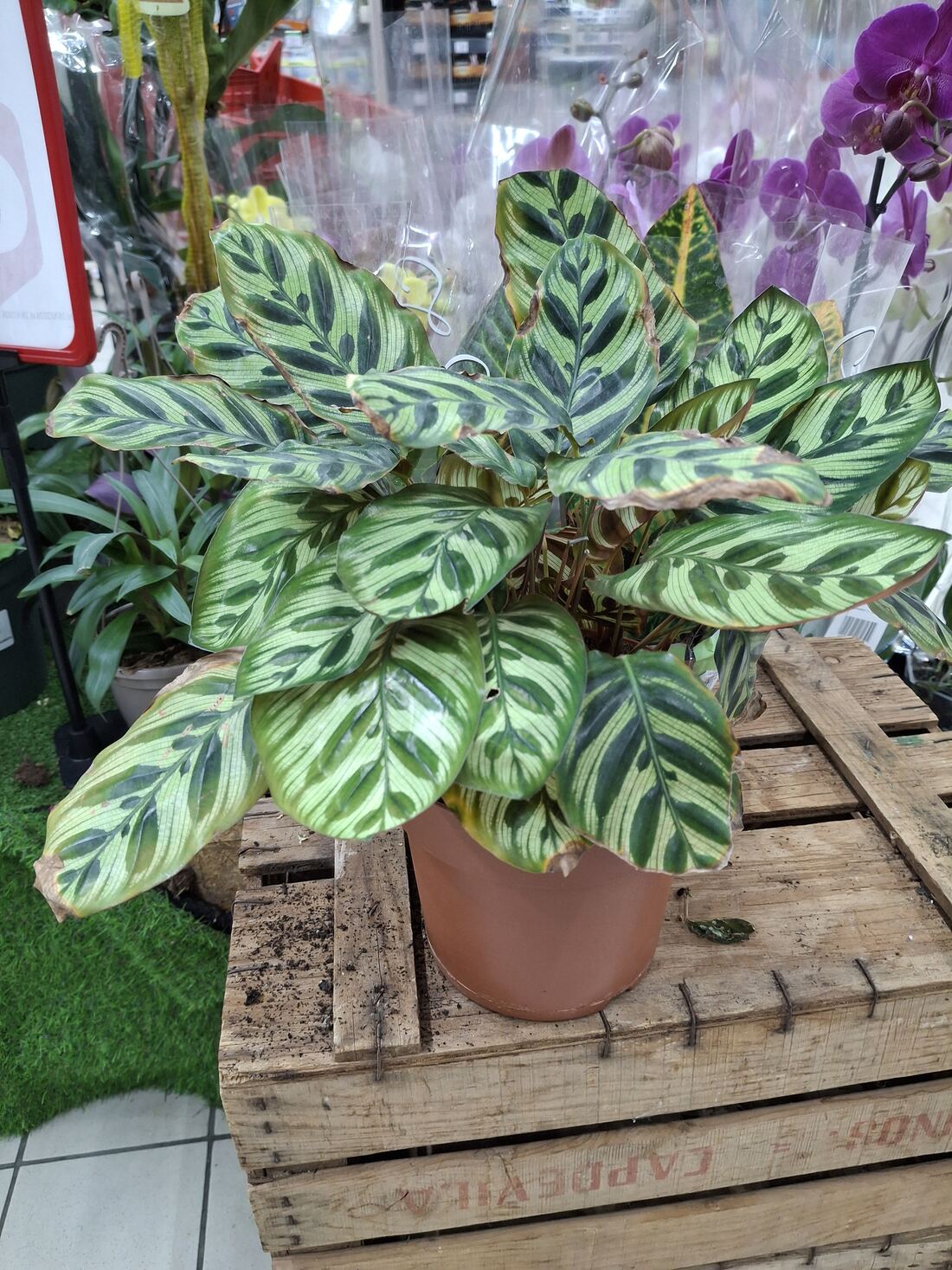
- Brown, crispy edgesCheck drying, drainage, heat exposure and feeding history before blaming humidity or tap water.
- Curling or rolling leaves →Compare daily movement with persistent curling, then check the root ball.
- Yellowing lower leavesOne older leaf may be turnover. Several declining together warrant a moisture and pest check.
- Fading pattern →Compare light exposure, leaf age and possible pest damage.
- Leaves rise in the eveningDaily changes in leaf position are normal. Persistent rolled blades need a separate check.
Propagation by division
Divide a healthy, established clump when repotting during active growth. Keep roots and growing shoots with each division; a detached leaf is not an equivalent cutting. Do not split a struggling plant merely to investigate one damaged leaf.
Pets and ongoing checks
ASPCA lists Calathea as non-toxic to cats and dogs. That does not make fertiliser, potting material or plant treatments safe to eat.
Take a photograph before changing care. Compare new damage and new growth each week, rather than expecting an old brown edge to become green again.
Reference material
Reference material consulted for this independently written guide. The publishers listed have not reviewed or endorsed it.
- RHS — Calathea growing guide
- University of Maryland — watering
- University of Maryland — symptom checks
- ASPCA — Calathea