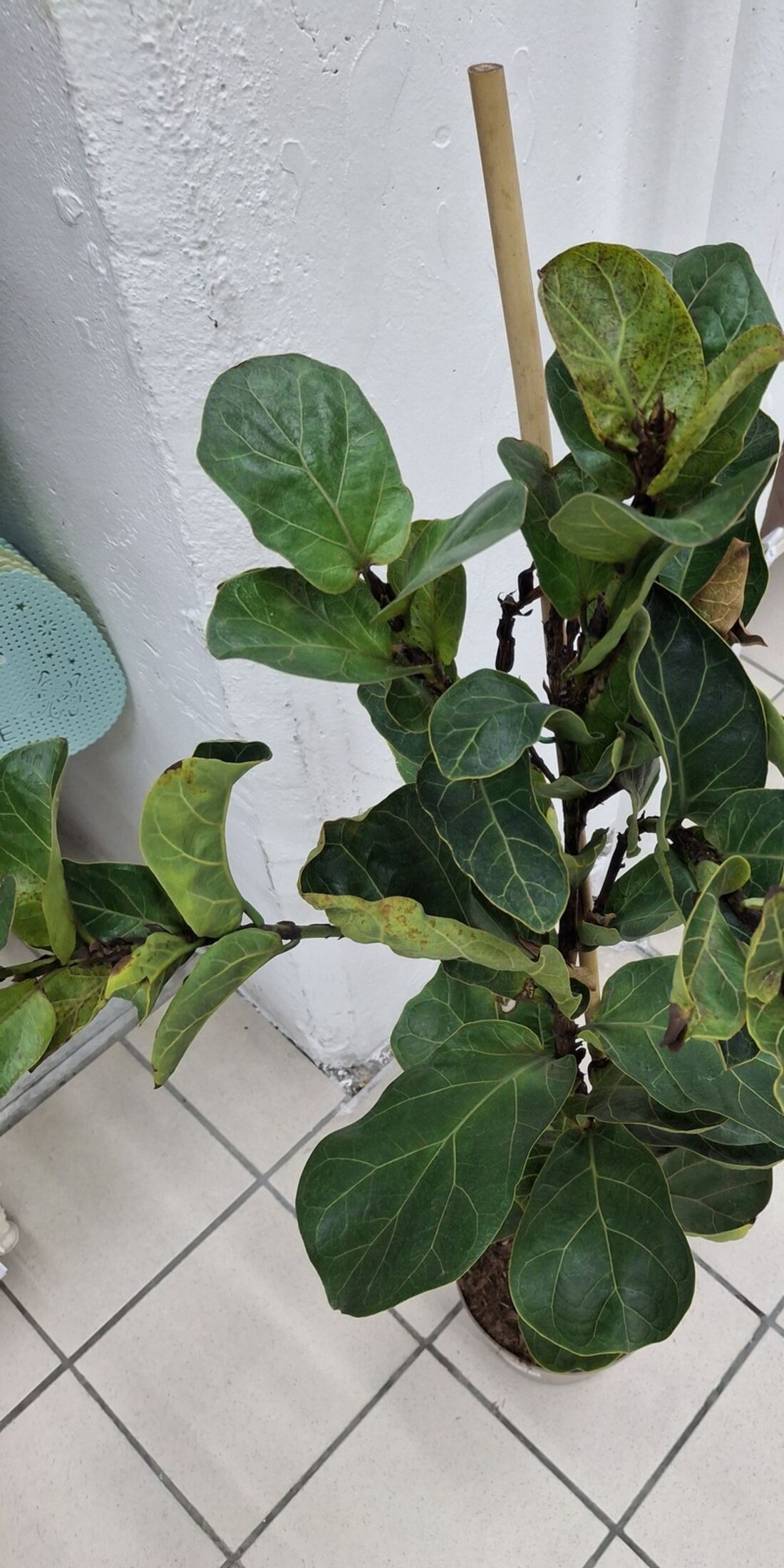
Find good light, then adjust gradually
Give your fiddle-leaf fig bright, indirect light. Protect leaves accustomed to shade from a sudden move into strong sun. Check the position through the day, especially when seasonal sun begins reaching a previously sheltered window.
Leave room to inspect the leaves and rotate the pot occasionally for balanced growth. A convenient empty corner is not necessarily a suitable growing position.
Check the pot, not the calendar
Let the upper few centimetres of mix dry before watering, while avoiding repeated complete drying of the root ball. In a large pot, check below the surface too. Water thoroughly, let excess escape and empty the outer pot.
Record how long drying takes in your home. A weekly reminder can prompt a check, but should not automatically trigger watering. If the plant wilts while the pot is still wet, investigate drainage and roots before adding more.
Potting and feeding
Use a well-drained houseplant compost and a container with drainage holes. Repot when roots need room or the mix deteriorates, increasing the size modestly. A large decorative pot can conceal standing water around a smaller nursery pot.
Feed during active growth at the product's recommended dilution. Account for fertiliser already included in compost. Extra feed cannot compensate for inadequate light or damaged roots.
Warmth and everyday care
Choose a warm room away from cold draughts and heating or cooling outlets. Moderate humidity suits this plant; avoid treating every brown edge as a humidity emergency. Wipe dusty leaves gently while supporting them, and check the undersides at the same time.
Symptoms: where to start
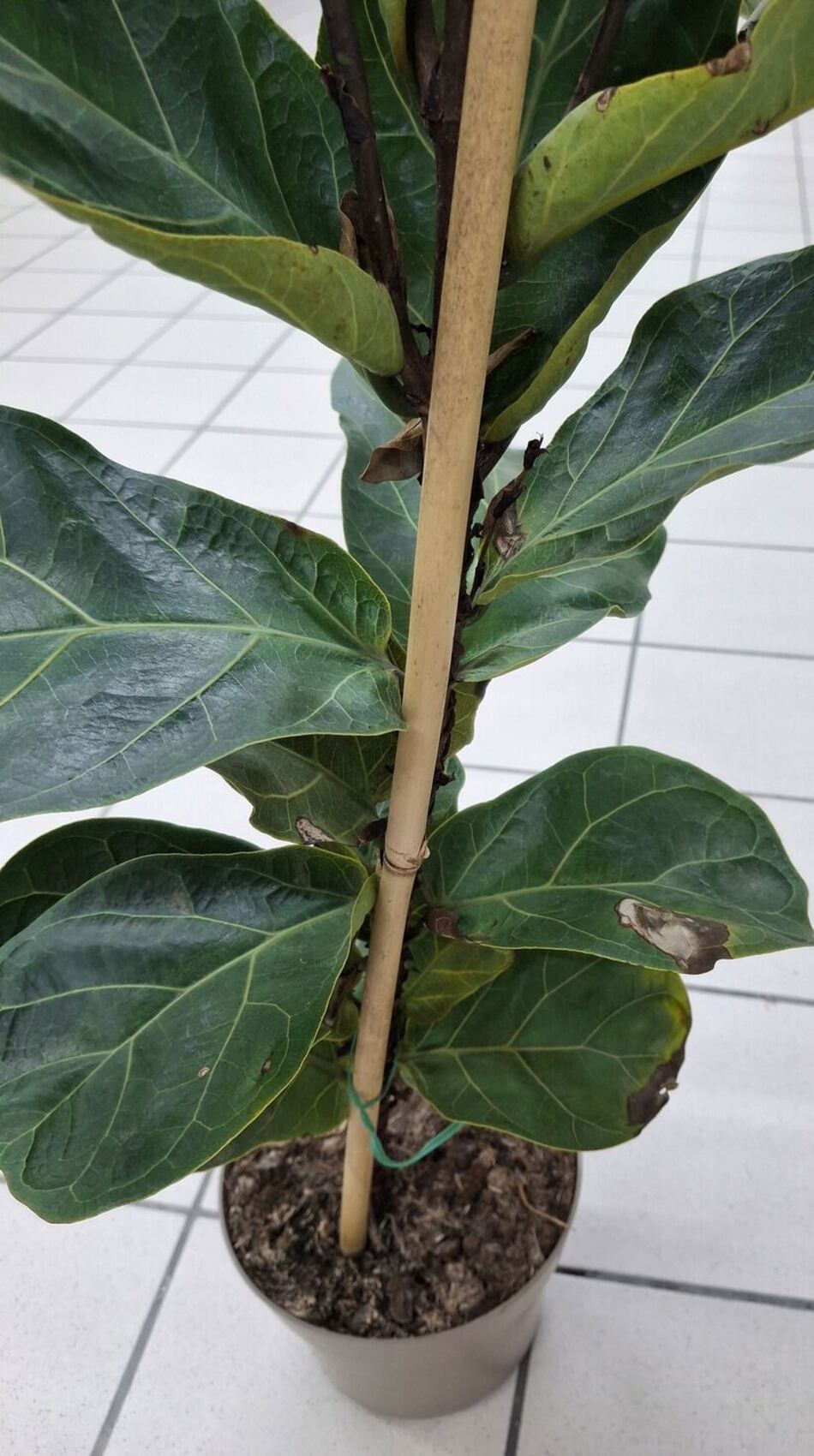
- Sudden leaf dropCheck moisture, recent temperature changes, light and pests. A move is context, not a diagnosis.
- Defined brown spotsRecord whether spots expand or appear on other leaves. See the leaf-spot checks.
- Brown, crispy edges →Check moisture and roots before adding water or increasing humidity.
- Yellow leaves →Note leaf age, number affected and the condition of the mix.
- No new growthReview season, light, roots and pests together. Slow growth does not automatically mean more feed is needed.
Stem cuttings, not a detached leaf
Use a healthy stem cutting with a node and growing bud. A leaf that forms roots without a suitable stem section is not the same as a new growing plant. Keep the cutting warm in bright, indirect light and a suitable propagation medium, moist but not waterlogged.
Rooting time varies. Avoid pulling repeatedly to test it; watch for established roots and sustained new growth before potting on. Wear gloves and protect surfaces from the milky sap.
Keep away from pets and children
Ficus lyrata is toxic if ingested, and its sap can irritate skin. Do not describe it as harmless because symptoms are sometimes limited. Contact a veterinarian if a pet has chewed it, or a poison information service for human exposure; breathing or swallowing difficulty needs urgent attention.
Reference material
Reference material consulted for this independently written guide. The publishers listed have not reviewed or endorsed it.
- RHS — ornamental fig care
- NC State Extension — Ficus lyrata
- University of Maryland — watering