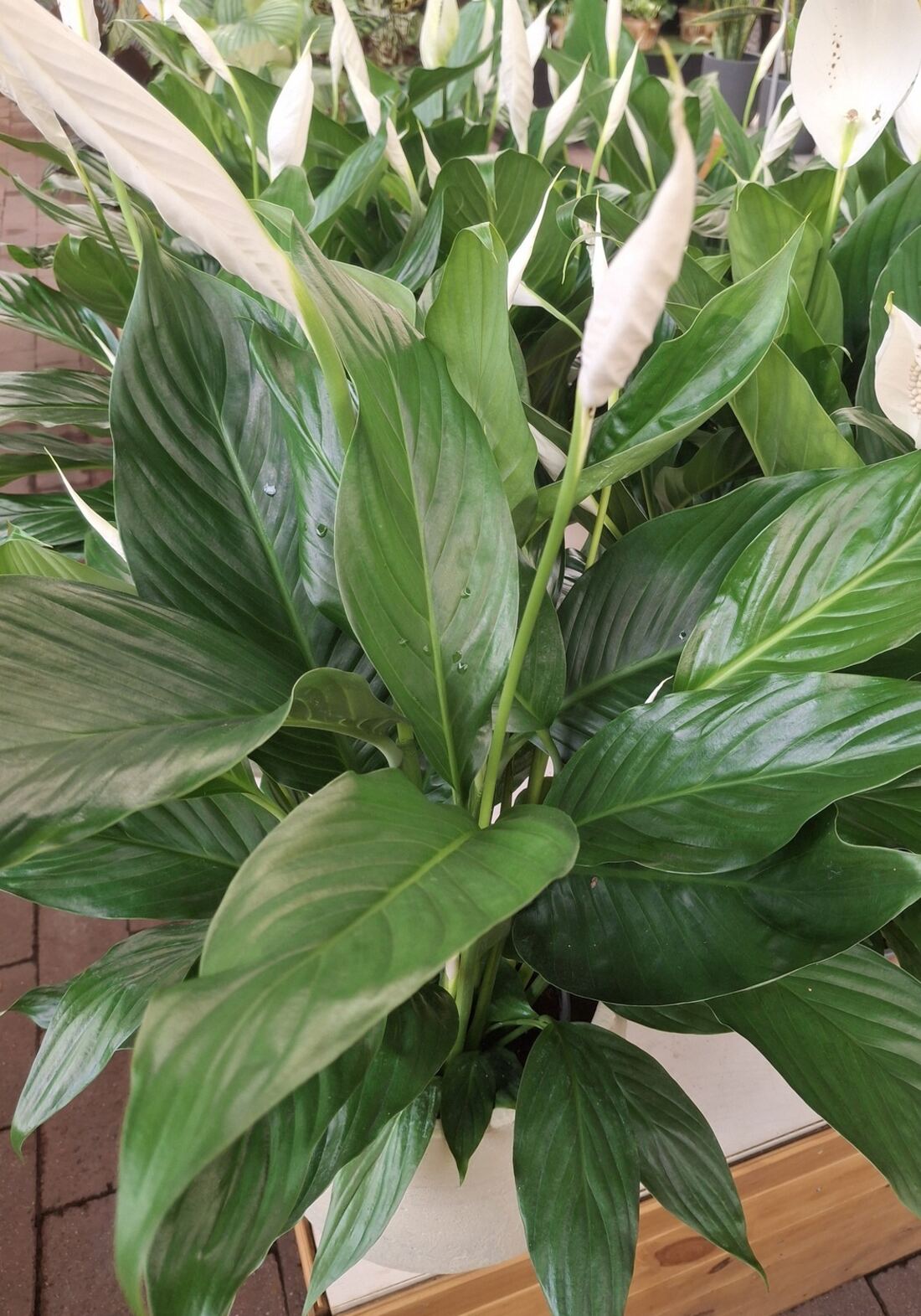
Light: tolerates low light, but won't flower without more
Give peace lily bright, filtered light, sheltered from harsh direct sun. It can tolerate a less bright position, but a dark corner is not a good choice for sustained flowering. Check actual daylight rather than relying on a fixed distance from a window.
Watering: check before responding to drooping
Check as the surface starts to dry, then water thoroughly and drain. Keep the root ball lightly moist rather than repeatedly letting it collapse with thirst. Empty the saucer or cover pot.
Drooping can follow dry roots, damaged roots, heat or other stress. Dry mix supports a thirst explanation; wet mix means you should not add more water automatically. Inspect drainage and, if decline continues or the base is soft, inspect roots. Recovery is not guaranteed within a few hours.
Soil & potting
Use moisture-retentive but well-drained houseplant compost in a draining pot. Repot when roots crowd the container, watering becomes difficult or the mix deteriorates. Choose only a modest increase in size.
Do not deliberately stress roots or keep a severely crowded plant in its pot to force flowers.
Humidity & temperature
Keep the plant warm and away from cold draughts or hot air outlets. If unusually dry air is suspected, measure conditions near the leaves. Humidity adjustments cannot substitute for a moisture and root check.
Feeding
Follow a suitable houseplant fertiliser's label during active growth, allowing for feed already in fresh compost. Reduce feeding when growth slows; extra fertiliser will not make unhealthy roots function or guarantee flowers.
Common problems, at a glance
Use these checks to choose the next guide; a symptom alone does not establish a cause.
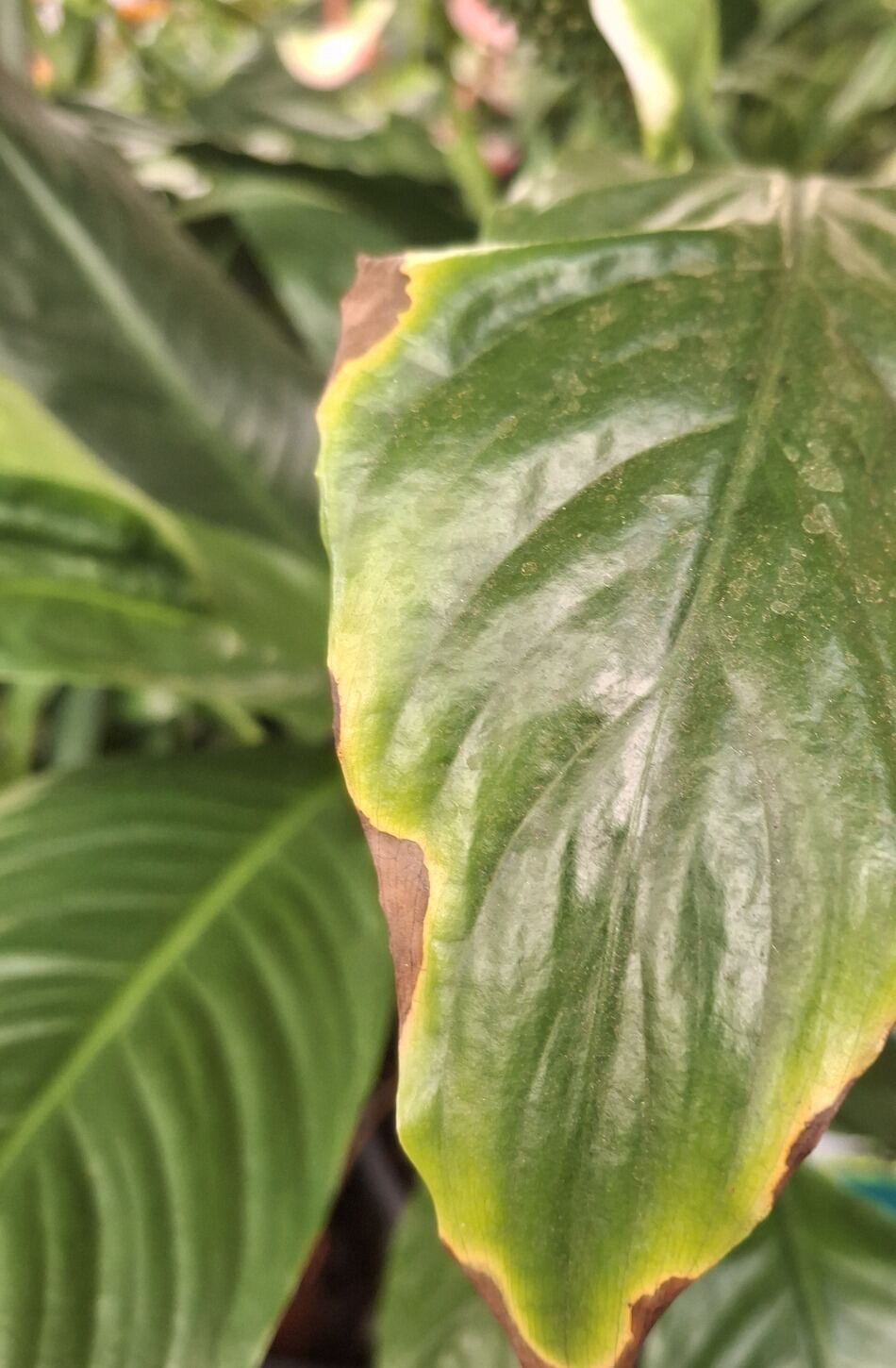
- Brown, crispy leaf tips or edges Review watering, root health, heat, feeding and water quality together instead of blaming one cause.
- Not flowering Review light, maturity, cultivar and root health. A gap between flowers is not automatically a care failure. Full breakdown →
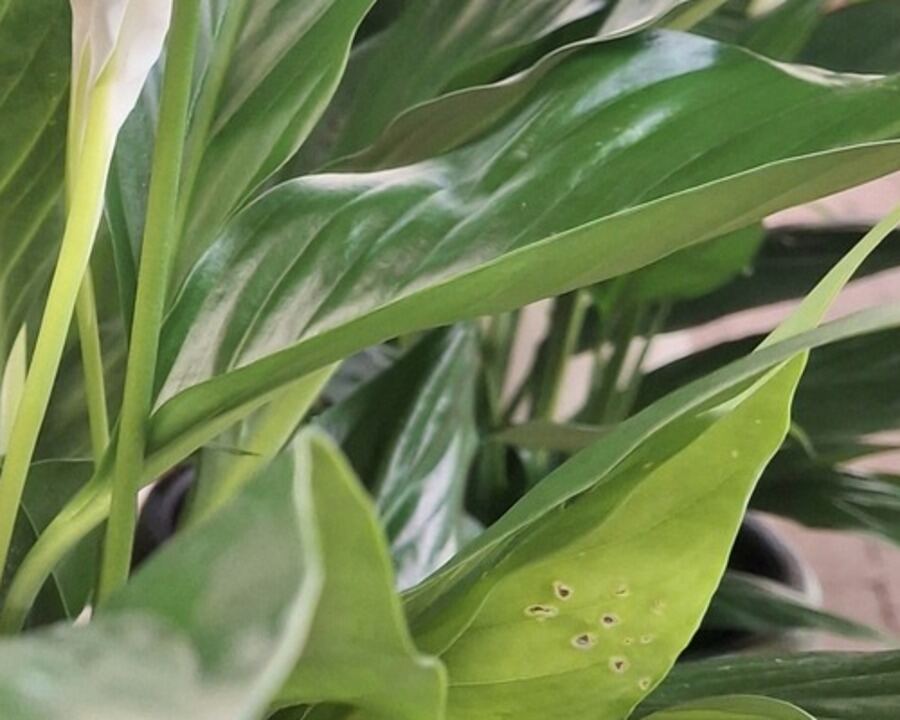
- Small holes or spotting on leaves Check for handling damage and pests. Mites and scale do not normally chew round holes.
- Flowers turning green or developing spots as they age An ageing spathe can turn green or brown. New spreading lesions elsewhere need a separate check.
- Yellowing leaves One older leaf may be normal turnover; several changing together deserve a moisture, root and pest check. Full breakdown →
Propagation: division, not cuttings
Divide a healthy established clump so each section has roots and growing shoots. Pot each into a suitable draining container, keep the mix lightly moist and monitor while it establishes. A detached leaf is not a replacement for a rooted division.
Is Peace Lily safe for pets?
No. Peace lilies contain irritating calcium oxalate crystals and should be kept away from pets and children. Contact a veterinarian after suspected ingestion; difficulty breathing or swallowing requires urgent help. A peace lily is not a true lily, but that distinction does not make it safe to chew.
Keep a short care record
Photograph the whole plant and any damage, and note moisture checks and recent changes. Compare later growth rather than expecting an old scar to disappear. Continuing collapse, expanding lesions or extensive decay deserves specialist help.
Reference material
Reference material consulted for this independently written guide. The publishers listed have not reviewed or endorsed it.
- RHS — peace lilies
- University of Maryland — watering
- University of Maryland — symptom checks