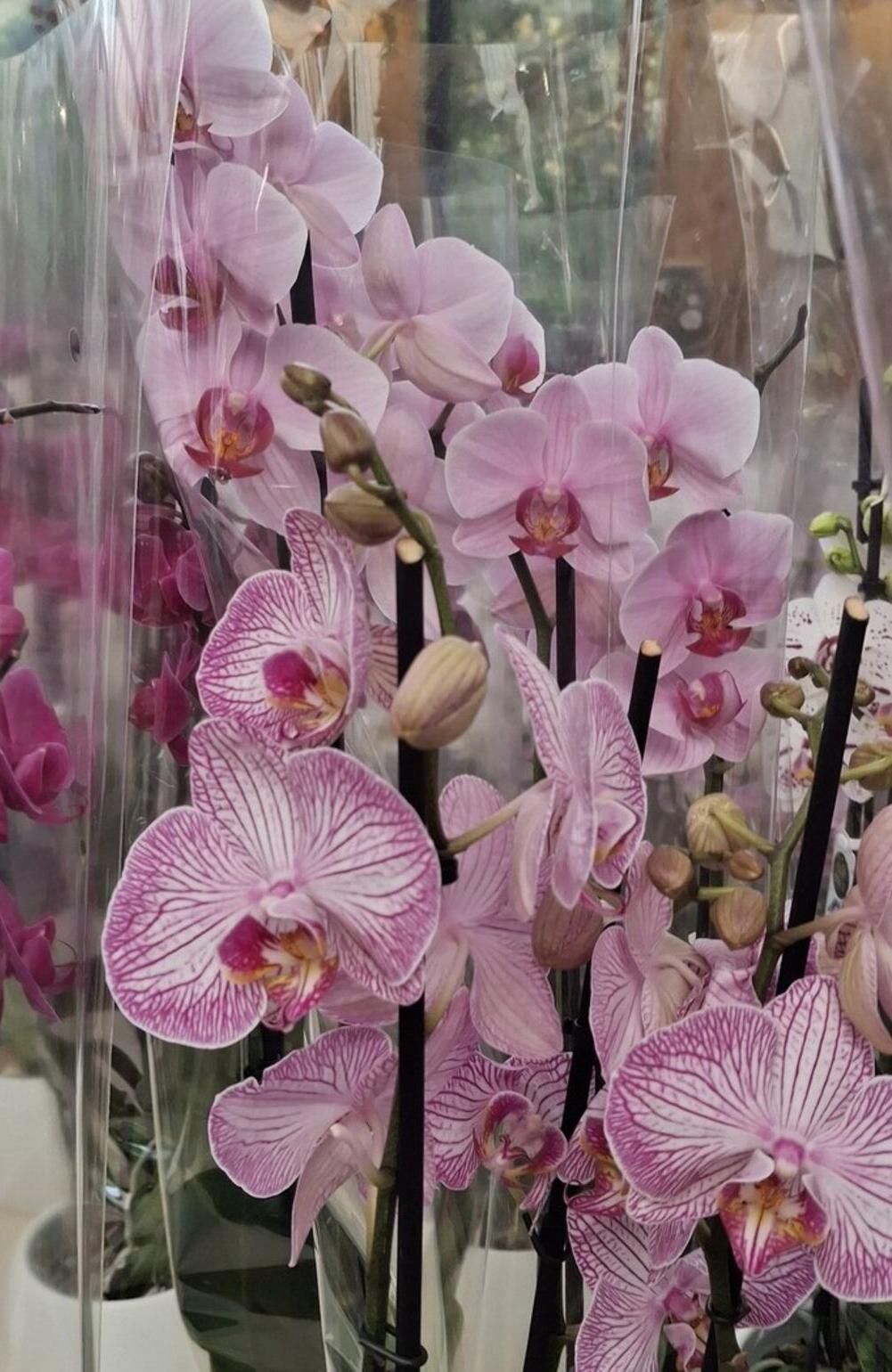
Bright light, protected from harsh sun
Give a moth orchid good daylight with protection from strong direct sun. Check the actual position throughout the day: a shaded window and an exposed windowsill can behave very differently. Increase light gradually if the plant has been in a dim spot.
Leaf colour varies with the hybrid. Judge the combination of light, root health and new growth rather than trying to achieve one exact shade of green.
Water as the medium approaches dryness
Phalaenopsis roots need moisture and air. Water thoroughly with tepid water when the medium is nearly dry, then let excess drain completely. Avoid both a continually soaked pot and prolonged complete drying.
Check below the surface. A clear pot lets you compare moisture in the centre with the visible roots, and pot weight is another useful clue. Moss usually retains water differently from coarse bark; neither has a fixed weekly timetable.
Remove water collected in an outer pot and blot any trapped in the crown, where the leaves meet. If the leaves are limp while the mix is wet, use the root-health guide before adding more water.
What about the ice-cube instructions on the label?
A controlled study of Phalaenopsis in bark found that ice irrigation did not reduce display life or the measured indicators of plant health compared with an equivalent volume of room-temperature water. That finding applies to the tested conditions; it does not establish one cube count for every orchid, pot or medium.
For the routine in this guide, use tepid water and full drainage. It makes it easier to wet the medium evenly and adjust to its drying rate. If following a grower's ice instructions, still check the plant and medium; cube sizes vary, so a number of cubes is not a universal water volume.
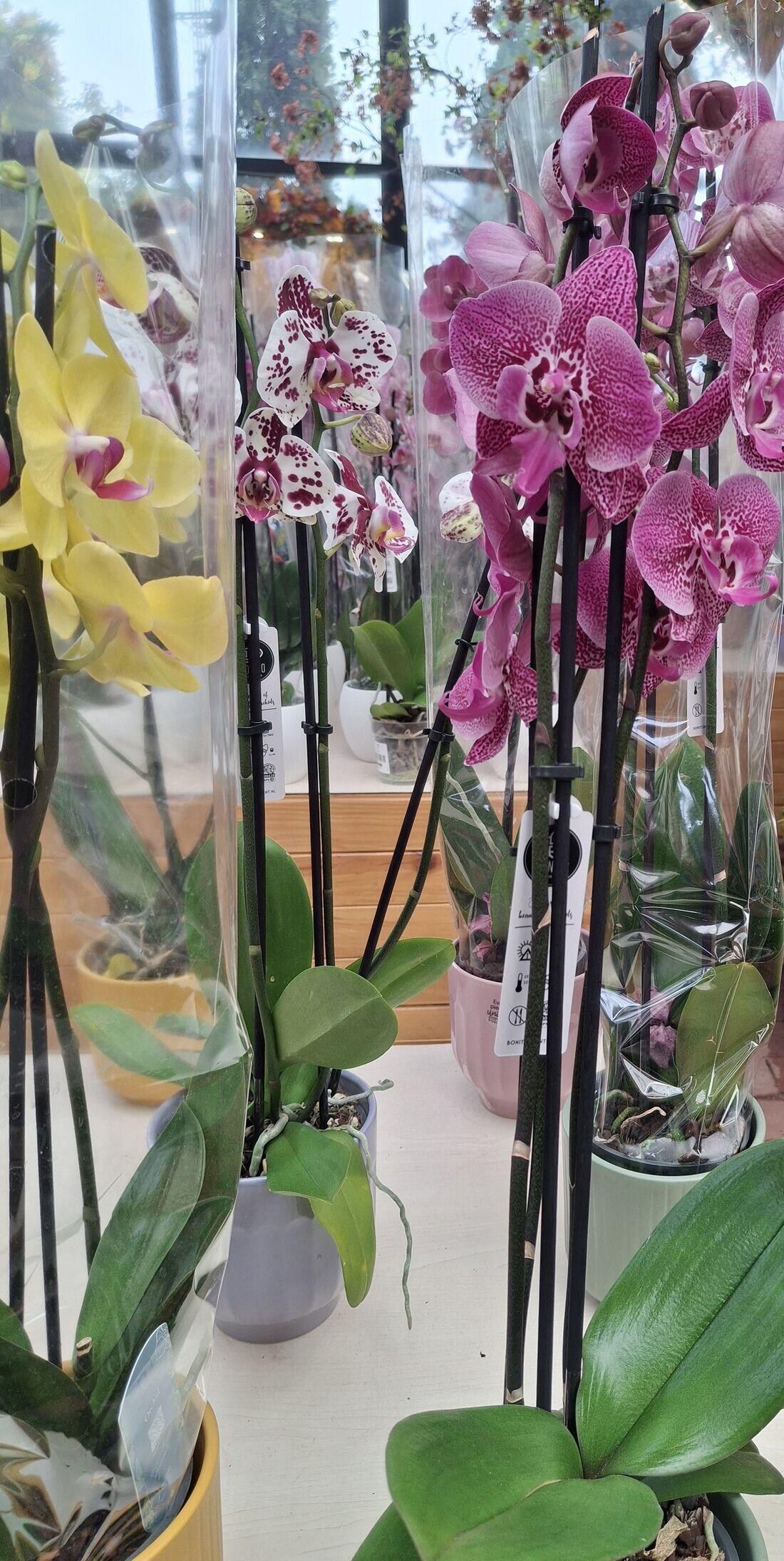
Use orchid medium and keep useful roots
A bark-based orchid mix is a practical starting point. Sphagnum-based setups can also work, but require a different watering rhythm. Ordinary dense potting soil is unsuitable for the roots of a typical moth orchid.
Repot when the medium breaks down or the root system needs attention. Use a container with drainage that comfortably fits the living roots. Aerial roots are normal; do not cut them off just to tidy the plant.
Warm, steady conditions
Keep common household hybrids comfortably warm, with nights above about 16°C (61°F), away from cold glass and radiators. A moderately cooler period can help some healthy plants start a spike, but moving them into an unheated room without measuring the temperature can cause damage.
Once buds form, avoid abrupt changes. If the room is very dry, keep the orchid out of direct heated airflow and consider a clean humidifier rather than repeatedly wetting the crown.
Follow the product's orchid instructions
Use a suitable fertiliser at its labelled dilution and interval, adjusting to active growth. Do not combine several feeds or increase the dose to force flowers. Fertiliser cannot replace a healthy root system.
Choose the next check
- Not flowering again →Review plant health, light and temperature before changing feeding.
- Buds falling before opening →Compare recent changes, watering, fumes and visible damage.
- Wrinkled leaves or questionable roots →Check tissue condition and moisture. Silver or stained roots are not automatically dead.
A keiki needs its own roots
A small plantlet, called a keiki, sometimes forms on a flower spike. Let it develop several substantial roots and leaves before separating and potting it. It is not a routine stem-cutting method, and a normal single-crowned Phalaenopsis should not be divided like a clumping houseplant.
Phalaenopsis and pets
Phalaenopsis is listed as non-toxic to cats and dogs. Still keep potting material, fertilisers and plant treatments out of reach; a plant's toxicity listing does not cover those products.