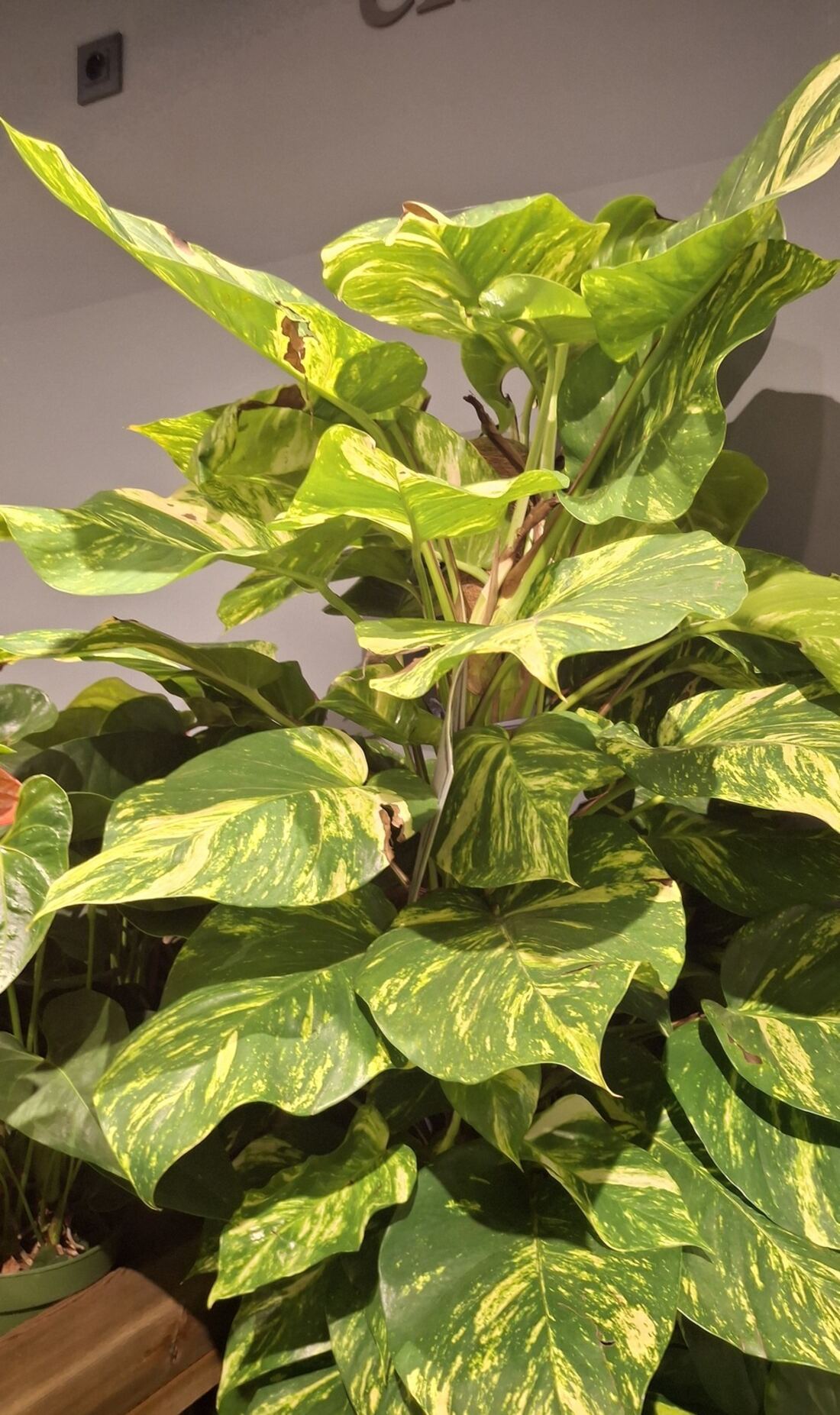
Light: it survives low light, but doesn't love it
Pothos tolerates lower light, but needs usable daylight or a grow light. A windowless bathroom is not a suitable permanent home without artificial plant lighting.
Choose medium to bright indirect light and increase exposure gradually. Compare recent growth and the cultivar's usual pattern; colour alone is not a light meter. Variegated types may need more light, but harsh sun can scorch shade-grown leaves.
Watering: let it dry out, then water thoroughly
Check the upper few centimetres of mix and the weight of the pot. Water when that layer has dried, then allow excess to drain and empty the cover pot. A dry surface can hide a wet centre in a deep container.
Use reminders to check, not to water automatically. Light, pot size and growth change the interval. If leaves wilt while the mix is still wet, investigate drainage and roots instead of adding more water.
Soil & potting
Use a well-drained houseplant mix in a pot with drainage holes. Repot when roots need room or the mix has deteriorated, choosing a container only modestly larger than the root system. Slow growth alone does not prove the plant needs a bigger pot.
Humidity & temperature
Normal household humidity is perfectly fine — pothos doesn't need misting or a humidifier to look good. Keep it between 65–85°F (18–29°C) and away from cold drafts; anything below 50°F (10°C) for extended periods can cause damage.
Feeding
Follow the fertiliser's houseplant instructions during active growth, allowing for feed already in fresh compost. Reduce or pause feeding when growth slows. Extra feed cannot compensate for inadequate light or damaged roots.
Common problems, at a glance
Start with these checks, then follow the linked guides for more detail.
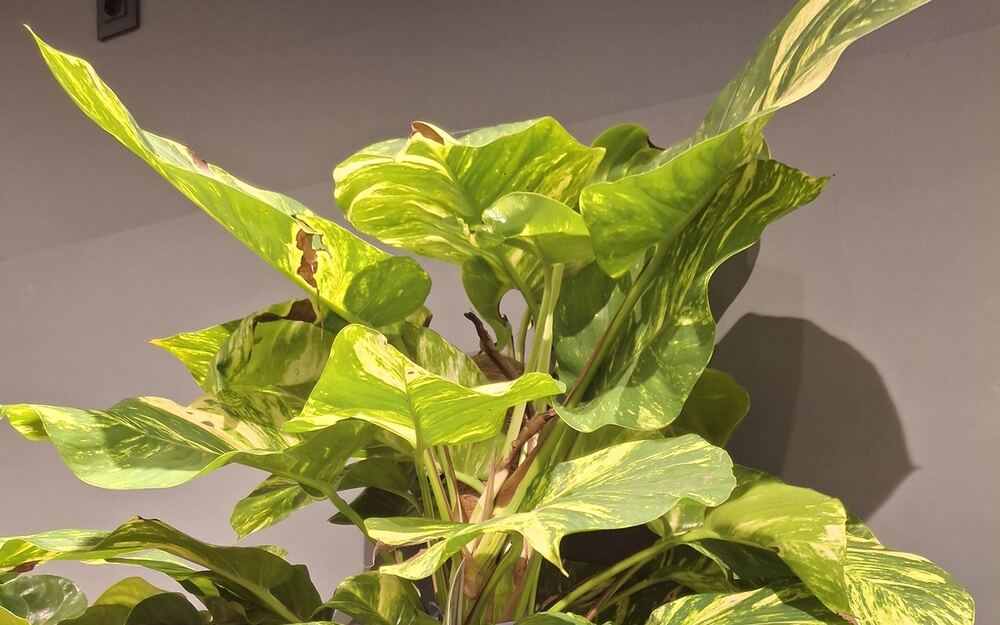
- Yellow leaves → Check moisture, drainage and recent changes. Yellow colour alone does not identify the cause.
- Brown, crispy tips or edges Underwatering, low humidity, or a buildup of mineral salts from tap water and fertilizer over time.
- Long, bare vines with small, spaced-out leaves Check light and whether leaves have fallen from an older vine. Full breakdown →
- New leaves losing their variegation, coming in solid green Review light and the cultivar's usual pattern. Increase light gradually if needed.
- Small holes or torn patches in leaves Inspect for handling damage and pests if holes recur. Spider mites usually cause fine speckling rather than chewed holes.
Propagation: about as easy as houseplants get
Take a healthy stem section with a node and growing bud, using clean tools. A detached leaf without suitable stem tissue is not equivalent. Place the node in water or a suitable moist propagation mix, keeping leaves above the water or mix.
Keep the cutting warm in indirect light, inspect for decay and replace dirty water. Pot on when a useful root system develops, not on a promised date. Long-term growing in water needs appropriate nutrients and ongoing care; plain water is not a complete permanent feeding system.
Pothos vs. philodendron: how to actually tell them apart
Compare several features, not colour alone: both plants have green and variegated cultivars.
| Heartleaf philodendron | Pothos |
|---|---|
| Typically thinner leaves with a pronounced heart-shaped base | Typically thicker leaves, often with an uneven base |
| A separate protective cataphyll on new growth becomes papery | Leaf stalks have a grooved, sheathing base; new leaves also unfurl |
Pothos leaves do not emerge already open. Compare the stem and new growth together, and seek identification help if the label and plant do not match.
Is pothos safe for pets?
No. Keep the plant away from pets and children. Calcium oxalate crystals can cause irritation if chewed, and sap can irritate skin. Wear gloves when cutting stems. Contact a veterinarian after suspected pet ingestion; breathing or swallowing difficulty needs urgent attention.
What to watch next
Record moisture checks and recent changes, and compare photographs weekly. Look for stable leaves and healthy new growth, not damaged tissue turning green again. Rapid collapse or continuing spread needs closer assessment from a plant specialist.
Reference material
Reference material consulted for this independently written guide. The publishers listed have not reviewed or endorsed it.
- University of Wisconsin Extension — Pothos
- NC State Extension — heartleaf philodendron
- University of Maryland — watering
- University of Maryland — root rots
- University of Maryland — symptom checks