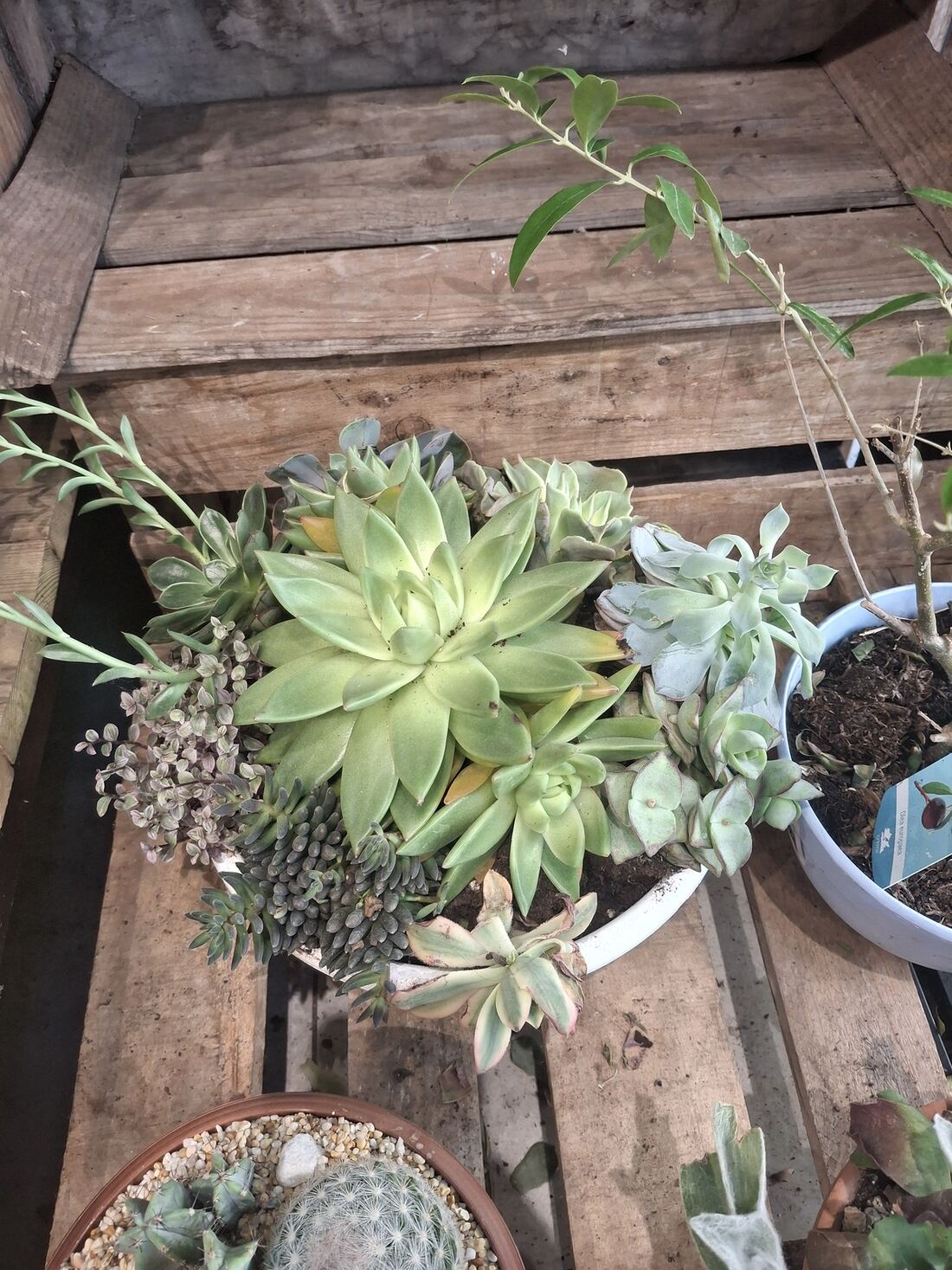
Light: more than a windowsill usually gives
This guide covers common dry-growing indoor succulents, especially rosette plants such as Echeveria. Succulent is a description, not one botanical group: rainforest cacti and other exceptions need different care. Identify your plant before following a watering or pruning method. For aloe-specific advice, see the Aloe vera care guide.
Many dry-growing types need strong light, but introduce direct sun gradually. A rosette developing long gaps between leaves may need more light; compare with the species' normal habit. Existing stretched stems do not shrink again.
Watering: the opposite instinct from most houseplants
For the dry-growing types covered here, allow the mix to dry between thorough waterings and let excess drain. Check the pot, not a two- or three-week calendar. Growth, dormancy, pot size and temperature affect water use.
Wrinkles can indicate dehydration, including when damaged roots cannot supply water. Check moisture and the base before watering a wrinkled plant. Do not apply this dry-out routine indiscriminately to Christmas cacti or other moisture-loving succulents.
Soil & potting
Use a suitable free-draining mix and a pot with drainage holes. A bag labelled cactus mix still needs to suit your conditions. Terracotta dries differently from plastic, but neither material prevents overwatering on its own.
Match the pot to the roots and avoid unnecessary increases in size. Do not pack fine sand into a dense mix and assume it will improve drainage.
Humidity & temperature
Dry-growing types usually do not need misting. Give them air movement and protect tender plants from cold. Hardiness and seasonal growth vary widely: some succulents are frost-hardy outdoors and others are not. Check the species before moving it outside or inducing a winter rest.
Feeding
Feed during the species' active growing period using a suitable product at the labelled dilution. Do not assume every succulent grows in summer or needs the same dose. Avoid feeding stressed plants to force growth.
Common problems, at a glance
Use these checks to choose the next guide; a symptom alone does not establish a cause.
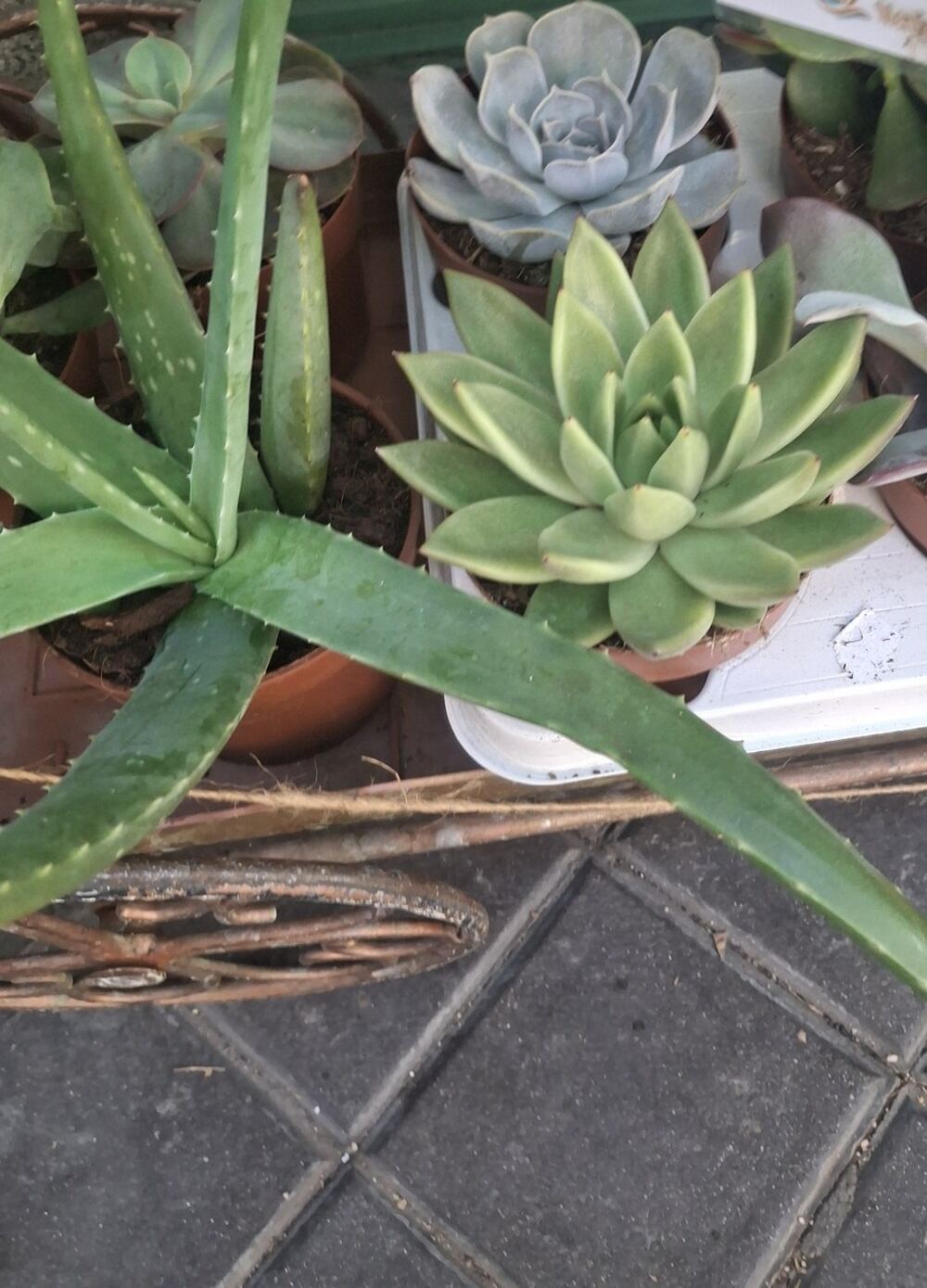
- Mushy, translucent, or black leaves at the base Check roots, drainage and cold exposure promptly. Drying the pot alone does not repair decayed tissue.
- Stretching, leggy growth Compare with the species' normal habit and review light. Existing elongated stems will not shrink. Full breakdown →
- Wrinkled, deflated leaves Check moisture and roots before watering; wrinkles do not always mean the pot is dry.
- Dropping lower leaves easily at a touch Compare species, leaf age and the rate of loss. Rapid or widespread shedding needs investigation. Full breakdown →
- Brown, dry, scorched patches Scorch is possible after stronger sun, but a patch alone does not prove the cause.
Propagation
Choose a method for the identified plant. Many Echeveria and Graptopetalum can form plantlets from intact leaves; others are better multiplied by offsets or stem cuttings. An aloe leaf is not equivalent to an Echeveria leaf cutting; see how to separate rooted aloe pups.
For suitable fleshy cuttings, allow a cut surface to dry and seal before placing it in an airy propagation medium. Keep it sheltered from harsh sun and avoid saturated mix. Timing and moisture after that depend on the species and rooting stage; daily misting is not a universal recipe.
Are succulents safe for pets?
Check the exact species. The word succulent does not establish safety: this broad group includes plants that are toxic or have irritating sap. Keep unidentified plants and cuttings away from pets and children, and contact a veterinarian after suspected ingestion of a toxic plant.
Keep a short care record
Photograph the whole plant and any damage, and note moisture checks and recent changes. Compare later growth rather than expecting an old scar to disappear. Continuing collapse, expanding lesions or extensive decay deserves specialist help.
Reference material
Reference material consulted for this independently written guide. The publishers listed have not reviewed or endorsed it.
- RHS — cacti and succulents
- University of Maryland — watering
- University of Maryland — symptom checks