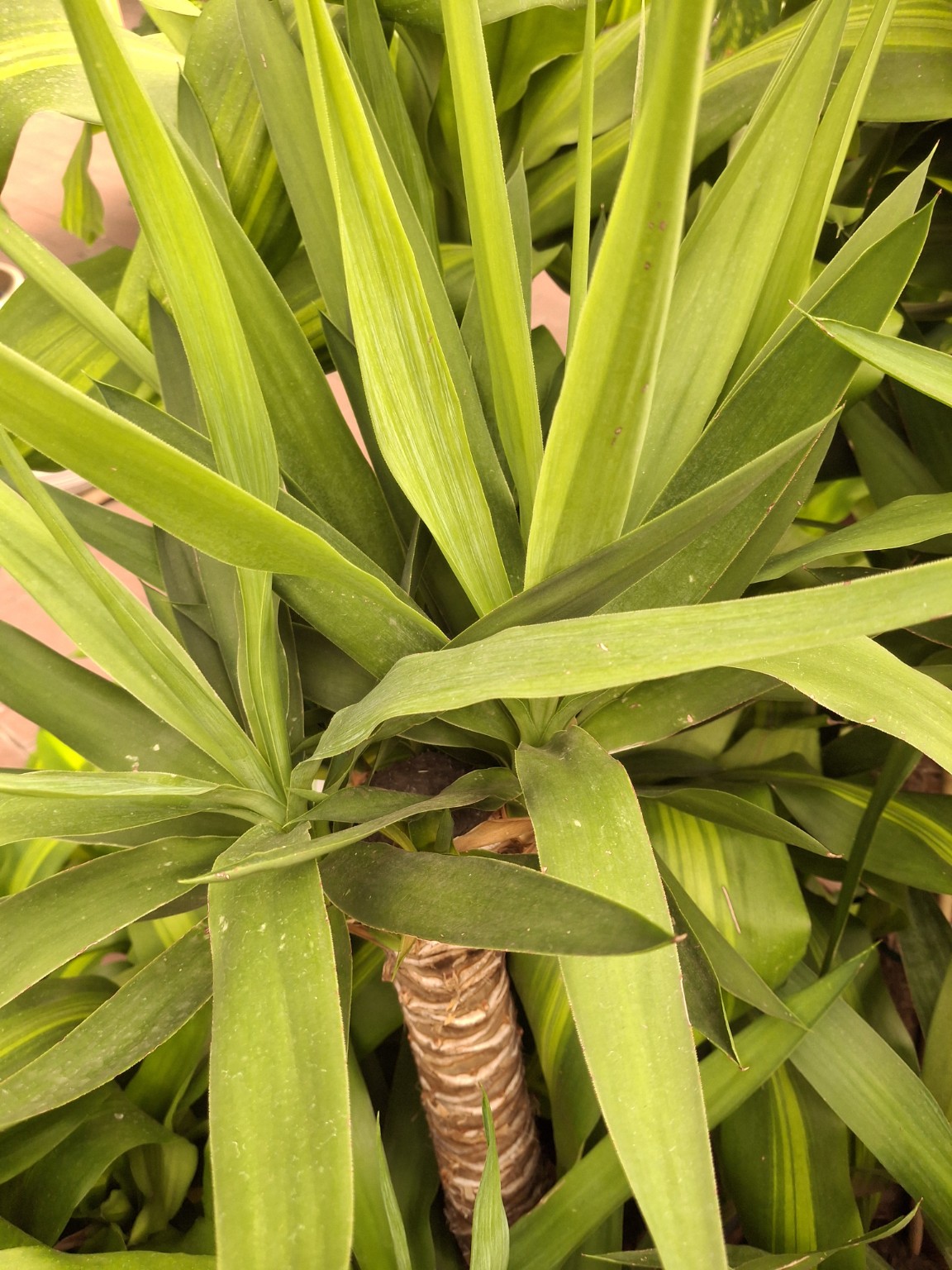
Which yucca does this guide cover?
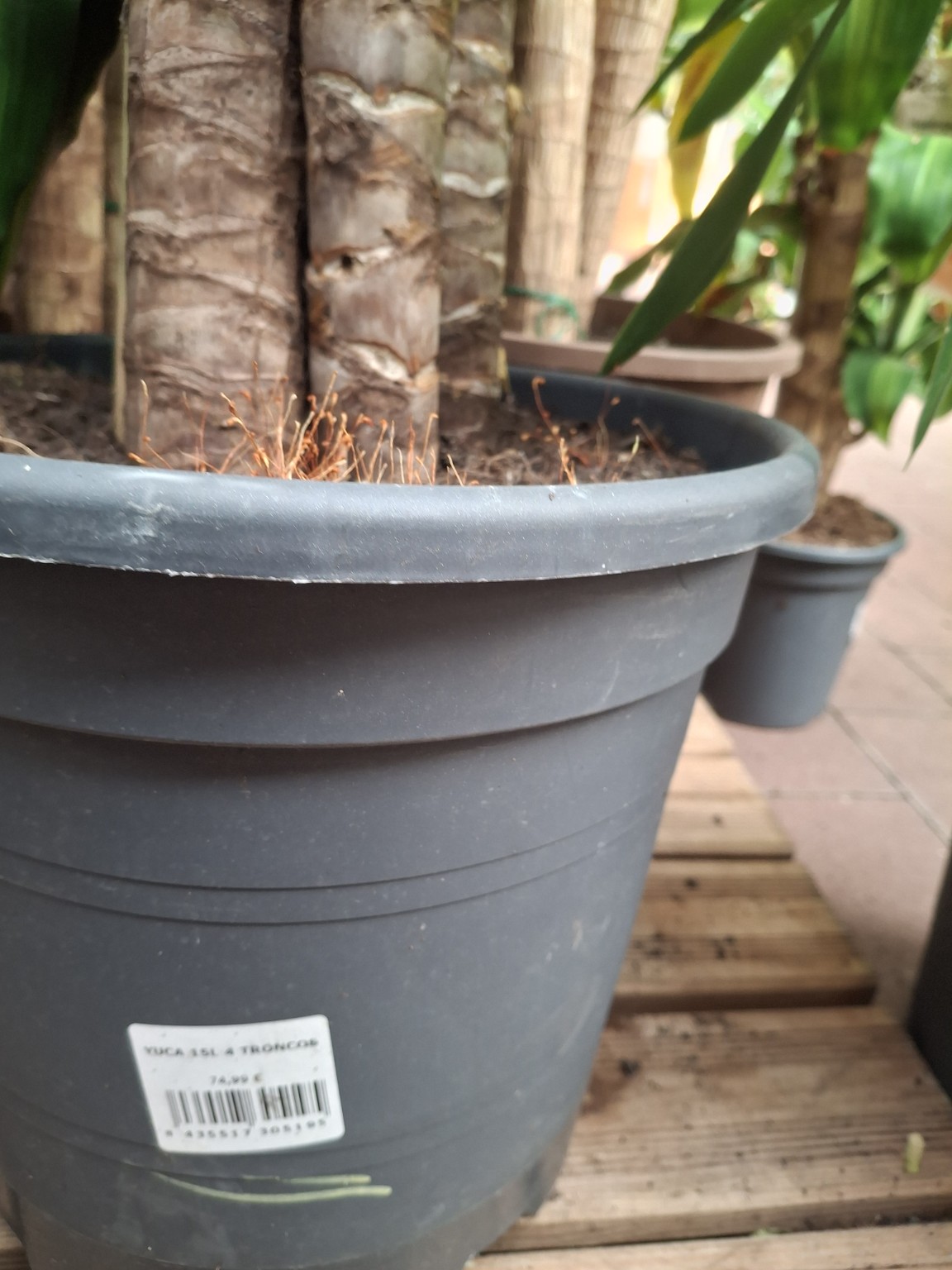
This is a guide to the indoor cane-form yucca commonly sold as Yucca gigantea or Yucca elephantipes: woody trunks topped with rosettes of long leaves. The nursery label in our photograph says "Yucca" without a species name. Its appearance is consistent with this indoor type; the label alone does not confirm a species or cultivar.
A mature yucca develops exposed lower trunks as older leaves are lost. That shape is normal. It is different from a crown suddenly collapsing or a trunk becoming soft. Indoor plants rarely flower, so a healthy crown can be a more useful measure of success than waiting for a flower stalk.
Choose the brightest suitable position
A yucca needs a genuinely bright location near a window. Introduce stronger direct sun gradually, especially after purchase from a shaded display. Watch for intense heat behind glass and provide some protection from harsh summer sun if needed. A distant room corner is unlikely to support sturdy new growth.
Normal indoor humidity is usually adequate. Keep the crown clear of cold drafts and the leaves away from hot radiators. A summer move outdoors is possible in suitable weather, but protect a tender indoor yucca from frost and acclimate it to outdoor light.
Check below the dry surface
Let the upper part of the potting mix dry between waterings. Feel several centimetres down and, if it is safe to lift, compare the pot's weight with its weight after watering. In a deep pot, a dry crust can hide a wet root ball. Wait if the mix below is still distinctly wet.
When water is needed, wet the root ball evenly and let surplus water drain away. Empty the outer pot or saucer. Check again according to the plant's conditions; a cooler, dimmer position often means a longer drying interval. Do not turn that observation into a fixed winter or summer timetable.
If water runs straight down the pot edge while the centre stays dry, check whether the mix has shrunk or roots have become crowded. More frequent surface splashes may leave the same dry centre untouched.
Drainage, stability and feeding
Use a pot with drainage holes and a porous potting mix suited to a plant that needs to dry partly between waterings. A suitable succulent mix can work, provided it drains well in your conditions. A layer of gravel at the bottom does not replace drainage holes or fix dense mix.
Check the roots before choosing a larger pot. A modest increase is easier to manage than a large volume of unused, wet compost. If the plant is top-heavy, a stable outer container can help without giving the roots an oversized inner pot. Keep drained water out of that container.
Feed modestly while healthy new growth is developing, using a houseplant fertilizer at its labelled rate. Take account of fertilizer already in fresh mix. Extra feeding cannot compensate for poor light, and a declining plant should be investigated before it is fed.
Yellow leaves and brown tips: check the pattern
A few ageing lower leaves are different from several crowns losing leaves at once. Note where the change began and whether new growth is affected. Leaf colour by itself cannot tell you whether to add water.
- Dry mix and a light pot: check whether the whole root ball has dried excessively. Water it evenly when needed.
- Wet mix with continued decline: check drainage and roots before adding more water.
- New marks after a move: review sun exposure, temperature and handling damage.
- Spots, mottling or sticky leaves: inspect leaf bases and undersides for pests. Isolate an affected plant if pests are found and identify them before treating.
Remove fully dead leaves carefully. Dry brown tissue will not turn green again; compare later growth and the spread of damage instead of expecting old marks to disappear.
Drooping leaves need a moisture check first
Some mature leaves naturally arch away from the crown. A change in posture matters more than a single downward-pointing leaf. Review light and check the root ball: both an excessively dry plant and one with damaged roots can wilt. Photograph the whole crown so you can compare it later without relying on memory.
A soft trunk is a different problem
A trunk that is softening, or a crown that is collapsing while the mix remains wet, needs prompt inspection. Remove the plant from its pot carefully and assess the roots. Firm roots and soft, decaying roots need different responses; dark colour alone is not proof of rot.
If there is localised root decay but a viable plant remains, remove clearly rotten tissue with clean tools and use fresh, well-drained mix in a clean pot. Widespread decay through the trunk or crown can make recovery unrealistic. Any attempt to save a cutting must start with sound tissue, not a soft or discoloured section.
Shortening a tall yucca
A healthy yucca can be shortened when growth resumes. Choose the intended height before cutting, use a clean, sharp tool and support the heavy top. Shoots may develop below the cut, but branching and recovery are not guaranteed. Investigate weak growth or soft tissue before treating pruning as a solution.
Use a healthy tip or an offset
For a tip cutting, take roughly 20–25 cm (8–10 in) of healthy stem measured from the top. Remove leaves that would be buried and set the lower end into coarse, free-draining rooting mix. Keep it warm, around 18°C (65°F) or above, in bright filtered light. Maintain light moisture without saturating the container.
Basal offsets are another option when the plant produces them. Prefer an offset with its own roots and separate it carefully, avoiding tears to the parent. Allow the cut to dry briefly before potting. A shoot partway up a trunk is not automatically a rooted offset. Follow its actual structure, and give roots time to develop without repeatedly pulling the new plant up.
See the propagation overview to compare these methods with division and plantlets.
Cats, dogs and handling
The ASPCA classifies Yucca species as toxic to cats and dogs. Keep the plant and pruning waste away from pets, and contact a veterinarian promptly if ingestion is suspected. Position long leaves away from faces and busy walkways, and use gloves when handling or cutting the plant.
Reference material
Reference material consulted for this independently written guide. The publishers listed have not reviewed or endorsed it.
Photographs on this page were taken by the site owner. They document individual plants, not confirmed diagnoses.
- RHS — Yucca: cultivation, pruning and propagation; Yucca elephantipes plant profile; Leaf damage on houseplants.
- NC State Extension, Plant Toolbox — Yucca gigantea.
- University of Maryland Extension — Watering Indoor Plants; Potting and Repotting Indoor Plants; Fertilizer for Indoor Plants.
- University of Maryland Extension — Diagnose Indoor Plant Problems; Root Rots of Indoor Plants.
- ASPCA — Yucca: toxicity to cats and dogs.