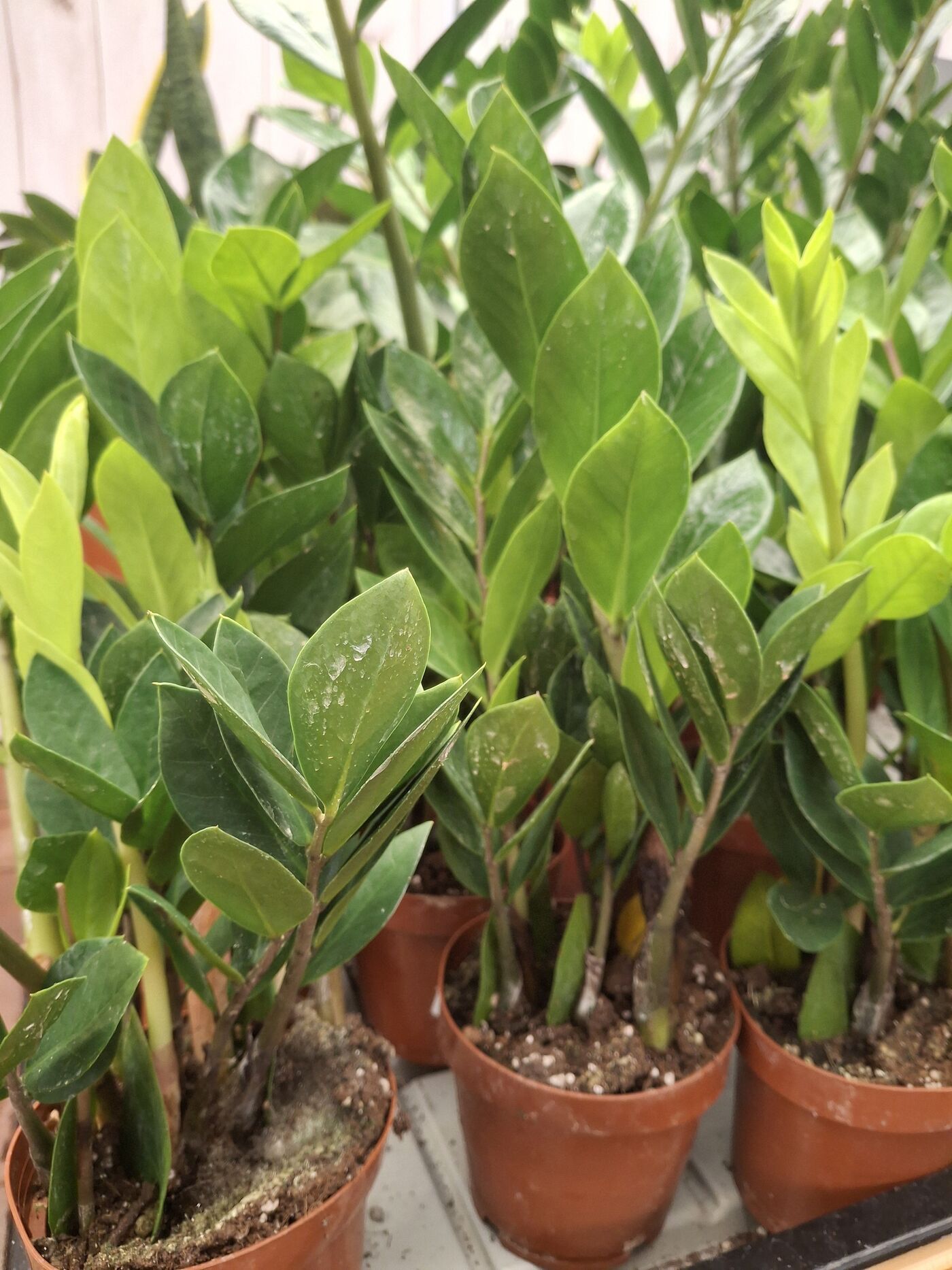
Light: tolerant, but not indestructible
Choose bright, indirect light for useful growth, and introduce stronger light gradually. Tolerating lower light does not mean the plant can thrive indefinitely in a dark corner. A windowless location requires appropriate artificial plant lighting.
Watch the new growth, not just how long an old leaf survives. Check the actual position at different times of day before moving a shade-grown plant into direct sun.
Watering: check the whole pot
Allow the potting mix to dry between waterings, checking deeper than the surface in a large pot. Compare pot weight and moisture: there is no universal three- or six-week interval.
When water is needed, wet the mix thoroughly, let it drain and empty the cover pot. Drought tolerance is not a reason to ignore prolonged dehydration. A soft base or continuing decline in wet mix calls for inspection, not another watering.
Soil & potting: drainage before anything else
Use a freely draining houseplant or succulent mix in a container with drainage holes. Choose amendments to suit the mix and your conditions, rather than treating one sand or perlite ratio as compulsory.
Repot when roots or rhizomes crowd the container, the pot distorts, or the mix deteriorates. Increase size modestly. One visible root alone does not prove repotting is urgent.
Humidity & temperature
Average household humidity is fine — no misting or humidifier needed. It's comfortable at normal room temperature, roughly 60–85°F (15–29°C), and doesn't like sitting below 50°F (10°C) for long stretches, which can cause soft, dark patches on the leaves. Keep it away from cold drafts and air-conditioning vents.
Feeding
Use a suitable fertiliser at its labelled dilution during active growth. Account for feed already in fresh compost and reduce or pause feeding when growth slows. Do not fertilise a plant with suspected root damage to force recovery.
Common problems, at a glance
Use these checks to choose the next guide; a symptom alone does not establish a cause.
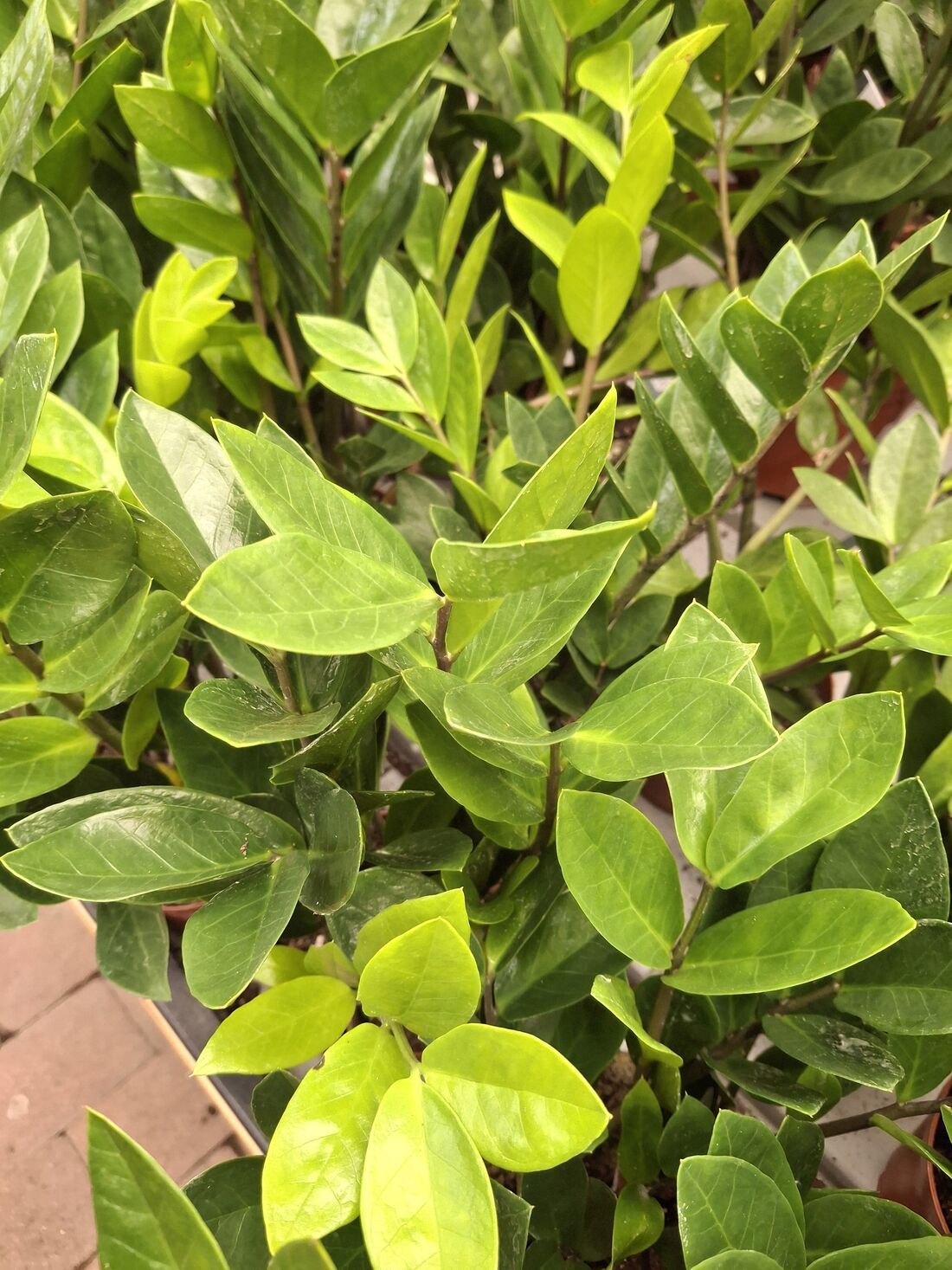
- Yellowing leaves Check moisture, drainage and tissue condition; yellow colour alone does not confirm rot. Full breakdown →
- Leaflets dropping off suddenly Check drought, roots and recent exposure together. Fallen leaflet colour is not a reliable diagnosis. Full breakdown →
- Stems leaning or flopping over Review light, root health and physical damage before deciding a support is enough.
- Brown, bleached, or scorched patches Compare sun exposure and recent changes, while watching whether patches continue to spread. Full breakdown →
- Small black spots or streaks on the stems Some markings may be harmless, but new, expanding or soft lesions deserve investigation.
Propagation: leaf cuttings work, but division is faster
ZZ can be multiplied by dividing an established clump or rooting healthy leaflets. Division gives you a larger starting plant; each section should retain viable rhizome tissue and roots. Handle cut surfaces carefully and adjust watering to the disturbed root system.
Leaflet cuttings develop roots and a small rhizome before substantial shoots appear, often taking months. Use an airy propagation mix and avoid repeatedly pulling them up to check progress. Neither method has a guaranteed completion date.
Is ZZ plant safe for pets?
No. Keep the plant and cut material away from pets and children, and wear gloves when handling sap. Contact a veterinarian after suspected pet ingestion rather than waiting for a large dose or persistent symptoms. Breathing or swallowing difficulty needs urgent attention.
Keep a short care record
Photograph the whole plant and any damage, and note moisture checks and recent changes. Compare later growth rather than expecting an old scar to disappear. Continuing collapse, expanding lesions or extensive decay deserves specialist help.
Reference material
Reference material consulted for this independently written guide. The publishers listed have not reviewed or endorsed it.
- NC State Extension — ZZ plant
- University of Maryland — watering
- University of Maryland — symptom checks